
Refreshingly, this Lesbian Visibility Week, acclaimed poet-turned-author Sophie Robinson’s debut novel, Prairie Oyster, is not a ‘coming out’ story. Indeed, the acclaimed poet-turned-author thrusts us immediately into the throes of addiction, belonging to queer 30-something-year-old protagonist, Pearl, as she navigates a complicated path of addiction, obsessive love, and her ambitions to make an indie film about silver screen starlet, Veronica Lake, and the wrongdoings of fame.
First published in February this year, this beautiful and, at times, bleak debut novel, with clear influence from experimental poetry, promises an original story about addiction and obsession, told with raw honesty, sensoriality, and visceral attention to detail – carving out a place for itself in the queer women’s literary canon.
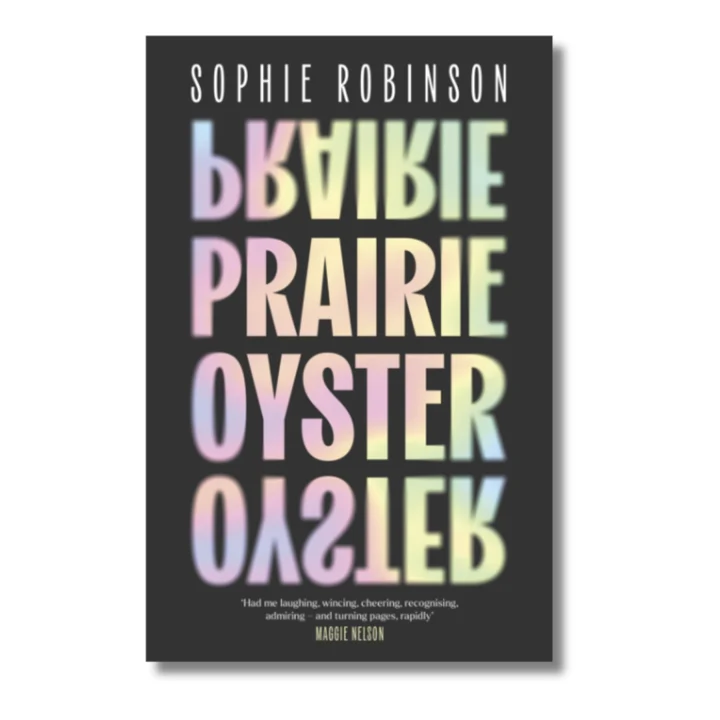
What is Prairie Oyster about?
The novel chronicles Pearl, a filmmaker racked with insecurity, whose success hinges on her next work. But her drug and alcohol addiction is threatening to limit her opportunities. On the brink of breakdown, Pearl is haunted by the idea of pursuing a passion project about her cinematic muse, Veronica Lake – the famous 1940s Hollywood starlet who popularised the peekaboo hairstyle, but whose alcoholism shunned her into obscurity and led to her eventual death.
Pearl gesticulates over how she should decide the narrative of her film, ‘The Lakes’. She decides on a dual narrative – her own, with a hopeful ending, and that of Lake’s. The novel’s narrative structure bifurcates into these voices, with Pearl’s third-person present experience, alongside fictionalised documentary-style fragments of Veronica Lake’s final interview in the seventies, both of which contribute to the novel’s cinematic feel.
Pearl finds Lake’s obscurity deeply troubling. It defies Pearl’s evangelical beliefs that film, and perhaps, fame, must mark our existence as evidence that we were here, perhaps linked to her own sense of self. Meanwhile, she spends time pontificating on these ideas, making excuses for missing the university classes she teaches, while rebutting diatribes about Lake from friends as they cut lines into the early hours and become sexually and romantically entangled (as queer friendships often do). These experiences unveil unsettling details about Pearl’s past, which she buries with another snort of cocaine, another drink.
When Pearl spends a summer with cult filmmaker Mitch Meyer, thirty years her senior, Pearl unravels further into a heady state of seduction, grasping at her identity as she navigates love and cycles of addiction, against the backdrop of New York’s art world subcultures.
The novel’s title references a 19th-century cocktail that consists of raw egg yolk, which is said to be a hangover cure, and becomes a recurring motif throughout the novel. Pearl swaps one addiction for another, becoming routinely jousted by her own circumstances, which leaves her in a perpetual state of obliterating spiritual hangover. As readers, we are intimately invited to walk through this experience with Pearl, eliciting empathy as the honest and raw descriptions of addiction and obsessive love take hold.
What stands out about Prairie Oyster?
It doesn’t take long to appreciate this novel as an ode to cinema, from the rich details of the New York indie queer film scene to the comprehensive biographical knowledge of Veronica Lake, and cinema history woven in throughout.
Article continues below.




Through the character of Mitch Meyer, Robinson might be paying homage to the queer filmmakers of the past, with Mitch’s dialogue: “You need a treatment, an arc, a compelling hook… Everything is so professional now… everybody wants to be famous young… I wasn’t getting paid, nobody was putting pressure on me to make anything. The world didn’t give a fuck if some broke dyke like me lived or died…. I’m afraid sometimes that was my best work.”
This feels reminiscent of the late queer filmmaker Barbara Hammer: “You have to choose between being a lesbian filmmaker and an avant-garde filmmaker. Lesbians wanted realism, avant-garde didn’t want lesbians.”
You may also like: Book Review: ‘The Safekeep’ by Yael Van Der Wouden
Mitch may be a nod to this generation of successful, creative elders bestowing their learnings upon the next cohort of queer filmmakers and queer creatives who defy heternormative depictions of family, relationships, ways to live, and continue to test the boundaries of filmmaking, contributing to the queer canon. One might think of Ruby Rich in New Queer Cinema: “I don’t want to make the mistake of falling into that comfortable old victim box, complaining of absence in the midst of presence. We’re not invisible anymore.”
This cinematic sense of time passing and trying to grasp the past is reflected further in Pearl’s yearn to connect with Veronica, lamenting that there is nothing Lake touched left in America, only widening the distance between them: “Veronica might as well have lived on a different planet, there’s nothing Pearl can touch that Veronica ever touched, everything washed away in the tide of time.”
But few images cut into the heart of addiction as urgently as the descriptions of Pearl convulsing from alcohol withdrawal, as the people around her also – slowly, and then all at once – withdraw from her life, including Mitch, to Pearl’s buried devastation and, at times, blind hope, which tests Pearl to face herself. This novel contains such richness and complexity of addiction that it is difficult to place in a box, or judge morally, much like where its protagonist sits in her world, whom we inexplicably root for.
An excerpt from Prairie Oyster
“Everything falls into place: she will get sober, she will eat well, she will start sleeping properly, she will work hard, she will resurrect her career, she will make The Lakes, she will charm Mitch, she will be somebody.”
Our verdict
Robinson has accomplished a novel that feels reminiscent of Elieen Myles or Michelle Tea’s Valencia; we are a fly on the wall to alcoholism, drugs, art worlds, dyke dynamics and the messy throes of addiction that push people to their limits while unveiling their deepest afflictions, which is what makes them human.
This searing depiction of addiction never shies away from the abject, corporeal experiences of addiction. With no neat and saccharine conclusion, it functions as a quest for dignity for Lake as much as it does for Pearl. The final product itself is perhaps the vision Pearl had for her film all along.
Star rating
Prairie Oyster, the debut novel by poet Sophie Robinson, was published by Fleet, an imprint of Little, Brown, in February 2026. You can buy a copy of the novel via Bookshop.org. Keep your eyes peeled on our channels for an interview with Sophie Robinson, coming soon. Meanwhile, check out our other queer book reviews.
Nonchalant x
You may also like

Lauren is a writer and editor based in Lewisham, covering all things queer culture, books, travel, arts and lifestyle. She also writes about hospitality and foodservice, sustainability, business and tech, and was previously a features editor for New Statesman Media Group.

