
Body Movements is back. The queer and trans DIY dance music festival returns to Southwark Park on August 30, and this year’s lineup – Romy, Eris Drew & Octo Octa, MCR-T, HEZEN, Six Sex, babymorocco, Hannah Holland, Roza Terenzi, plus takeovers from collectives including Daytimers, Boudica, Sextou, 2CPERREA, and Queer House Party – the queer underground’s biggest hitters, all on one bill.
Founded by DJ Saoirse, Clayton Wright of Little Gay Brother, and Simon Denby, Body Movements has become one of the most important dates in London’s queer calendar – and increasingly, in Europe’s. It’s community-driven, collective in nature, and deeply rooted in the underground scene that built it.
We caught up with Saoirse to talk about why the festival needed to exist, what it takes to build a genuinely safe space, and where Body Movements goes from here.
Body Movements has centred queer and trans artists from day one. What conversations did you, Clayton, and Simon have early on about why that needed to exist?
From the beginning, it never felt like we were trying to create a “queer version” of an existing festival model. It was more that we were looking around at the scene we actually existed within and realising it wasn’t being represented properly at scale.
The three of us had all spent years in queer nightlife, and we knew firsthand how much important cultural influence comes out of those spaces. But when you looked at bigger festival lineups, queer and trans artists were still often treated as niche, tokenistic, or confined to small stages.
We wanted to build something where queer culture wasn’t the side offering – it was the foundation.
You’ve built an incredible career in a scene that still skews overwhelmingly male and straight-presenting at the top. Did that personal journey shape what Body Movements became?
Article continues below.



Definitely. I think when you spend years navigating spaces where you don’t fully see yourself reflected, it inevitably shapes how you move through the world and what you later want to create.
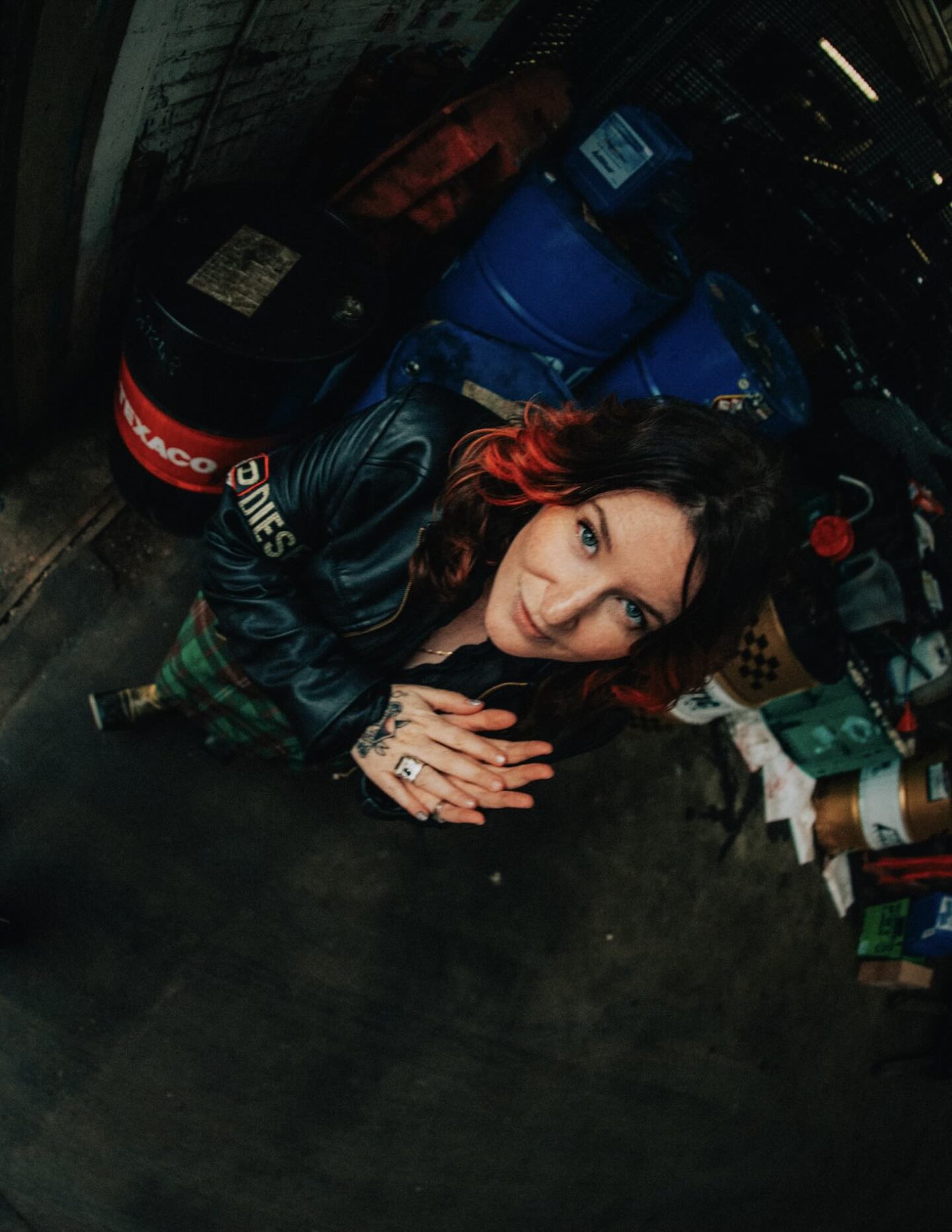
When I started out, there were obviously queer artists and women doing incredible things, but not that many in positions of power. A lot of that still exists.
I think one of the reasons Body Movements resonates with people is because it’s built by people who genuinely come from the communities they’re programming for. The audience can feel that. There’s a difference between diversity as branding and diversity as lived experience.
London keeps losing queer nightlife spaces, which makes what you’ve built feel even more vital. How do you think about Body Movements’ role in the broader community?
We’re very aware that a one-day festival can’t replace permanent community infrastructure. But we are a small team who also have other jobs and projects, so unfortunately our capacity to do much more is limited.
A huge part of the lineup is intentionally collaborative for that reason. We’re not trying to position ourselves as the sole voice of queer nightlife – we’re trying to create a meeting point between lots of different communities and movements.
The lineup this year is unreal – Romy, Eris Drew & Octo Octa, MCR-T, plus collectives like Daytimers, Boudica, and Sextou. How do those collaborations come together?
A lot of it comes very organically from relationships and mutual respect.
We spend the whole year immersed in music and nightlife culture, so we witness communities we think are doing great things and want to work with them. That balance between discovery and familiarity is a huge part of our curation process.
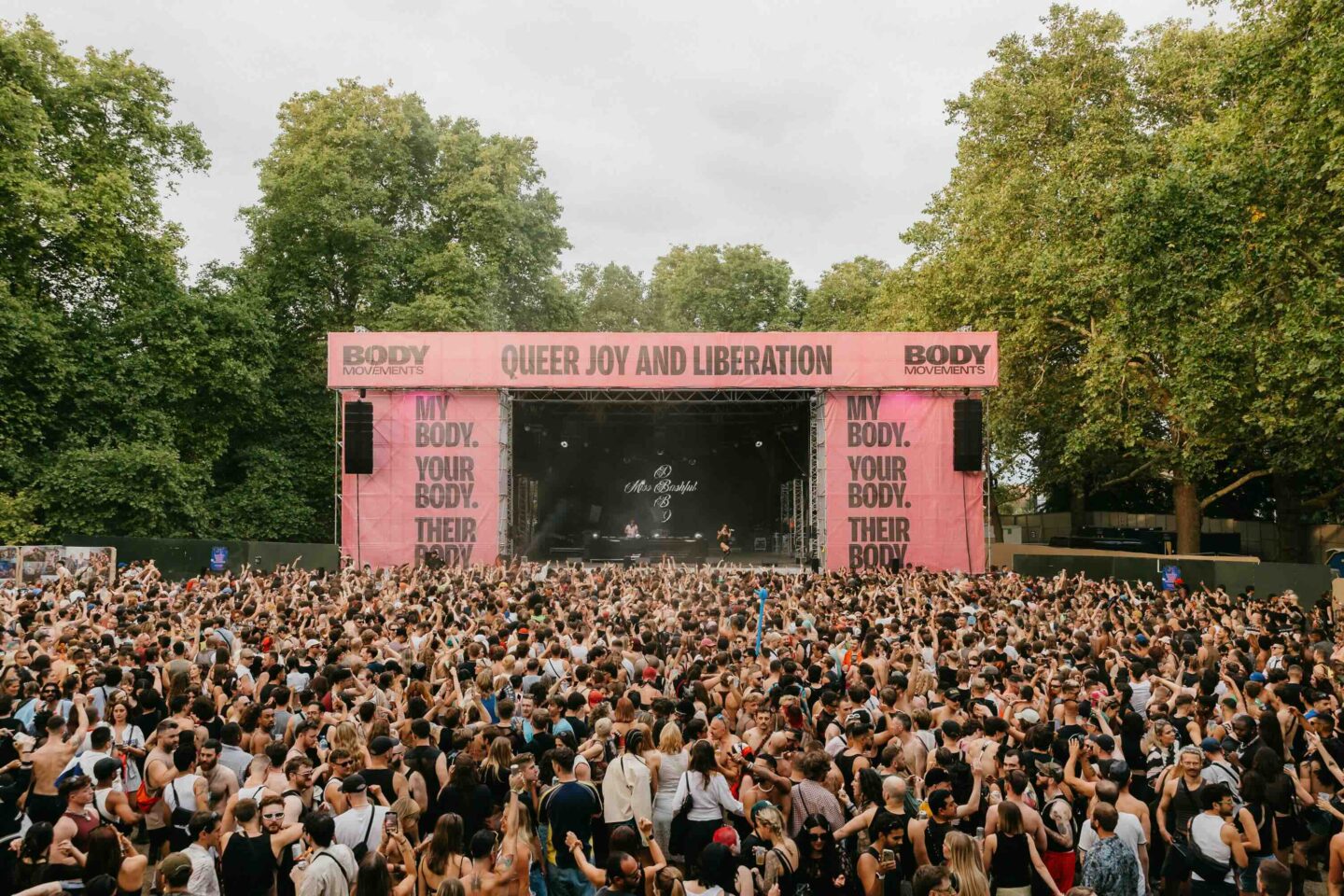
One thing that really stands out about Body Movements is how genuinely safe and welcoming it feels. What goes into making that real on the ground?
A lot of work, honestly.
I think sometimes people talk about “safe spaces” as though they happen naturally, but they don’t. Especially for an event our size, it requires a lot of infrastructure, planning, staffing, training, communication, and constant reflection.
We work really closely with welfare teams, accessibility consultants, security, and community organisations to think carefully about how people actually experience the festival on the ground.
You run a label, you DJ globally, you curate this festival – the range is impressive. How do you fit it all in, and what advice do you have for others who want to take a similar path?
I’m not sure I always do fit it all in successfully, to be honest. There’s definitely a lot of chaos behind the scenes.
But I think the common thread through everything I do is genuine passion and curiosity. In terms of advice, I’d say don’t build your entire identity around visibility or hype – sustainable careers are usually built on trust, consistency, and real connections.
And protect your love of music as much as possible, because the industry side can sometimes make that harder.
Who on this year’s lineup are you most buzzing to watch as a fan, not a founder?
That’s genuinely impossible to answer, but I’m very excited to have Six Sex perform on our main stage. We also have an amazing bunch of artists dropping in June that I’m hyped for.
Body Movements is genuinely being talked about as the leading queer festival in Europe now. Does that land as exciting or slightly daunting – and where do you want to take it next?
Honestly, both.
It’s obviously incredibly moving to see something that started from a small idea between friends grow into this huge community moment. We never take that support for granted.
But with growth also comes responsibility. We have all spent many nights losing sleep thinking about the what-ifs. Running a festival of our size comes with many risks, but in the end it all feels worth it.
Body Movements takes place at Southwark Park, London on Saturday August 30, 2026. Tickets and full lineup info at bodymovementsfestival.com.
Nonchalant x
You may also like

This article was written by one of our creative team writers here at Nonchalant Magazine.

