
There’s a version of Georgia Wood you’ve probably already seen. Hungover in a Paris hotel bed, asking for room service in her best GCSE French. Driving past Stonehenge with the energy of someone who’d been personally let down by history. Six million views. American quiz shows. A one-liner machine that could make a t-shirt slogan out of almost anything she says.
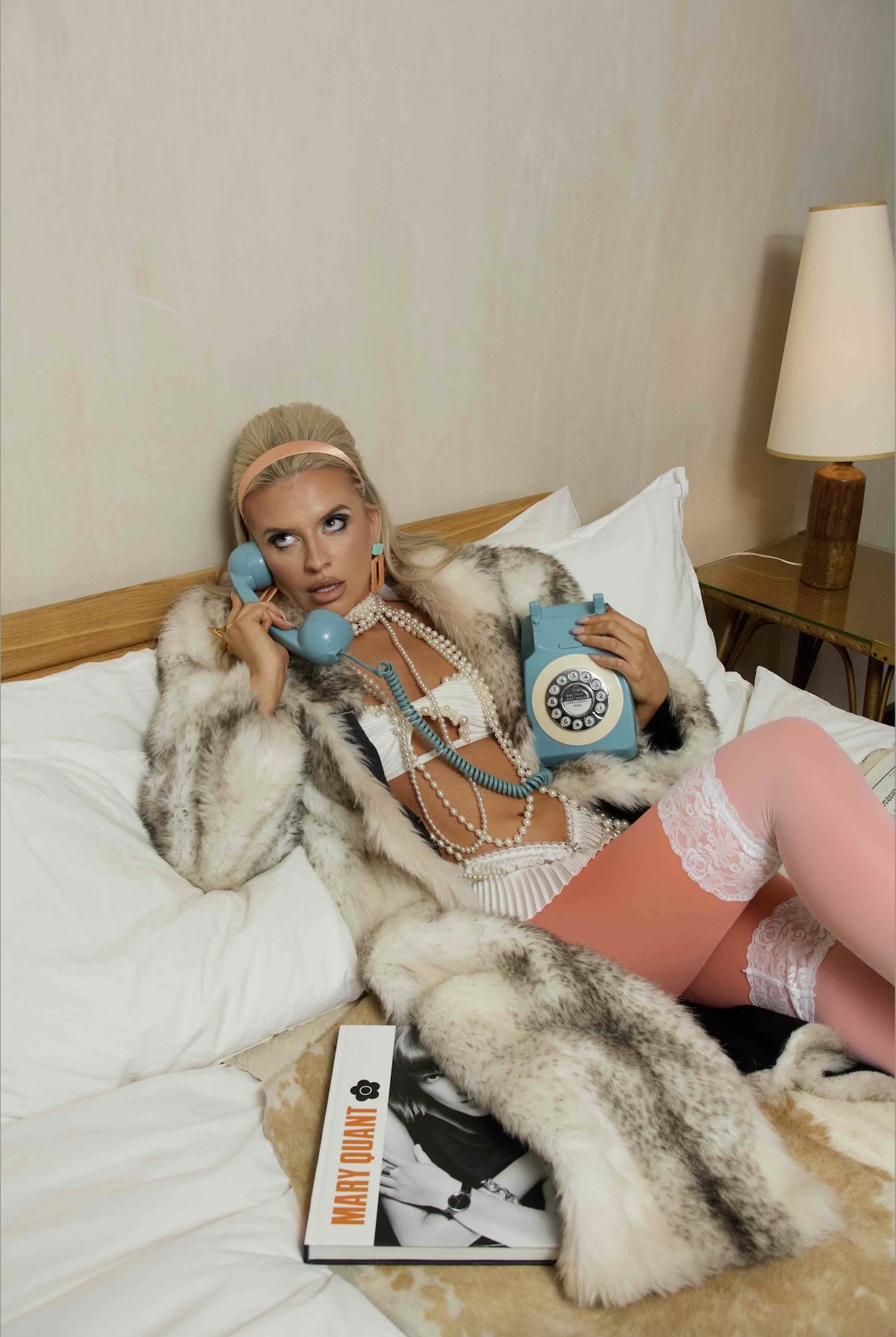
But there’s another version of Georgia – one she’s been growing into quietly, publicly, and entirely on her own terms. The 28-year-old actress, comedian and content creator came out at 23, having spent her whole life in Maidstone without a single reference point for what being a femme queer woman could look like. When she finally went looking online, #lesbian didn’t look like her either. So she became the thing she couldn’t find.
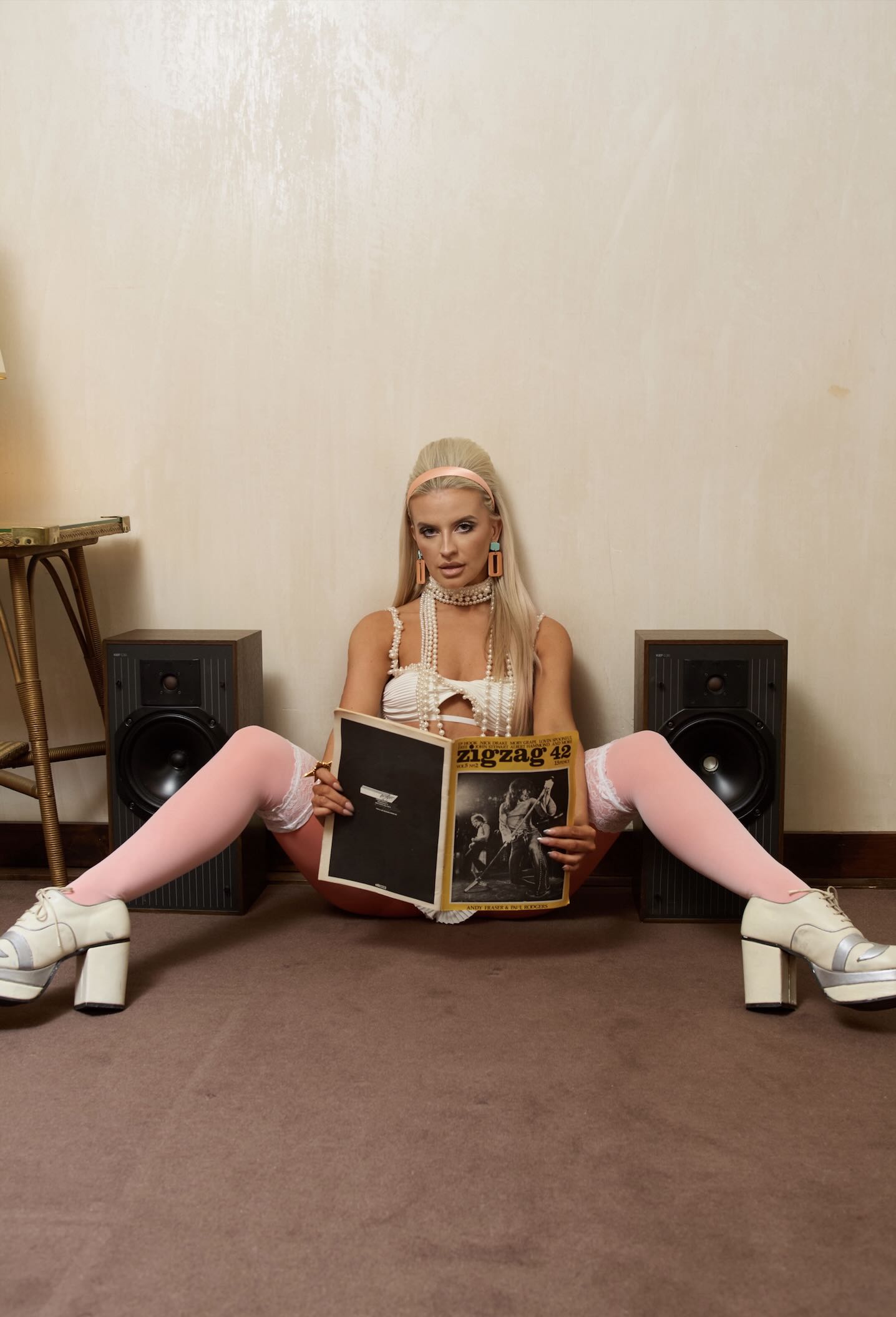
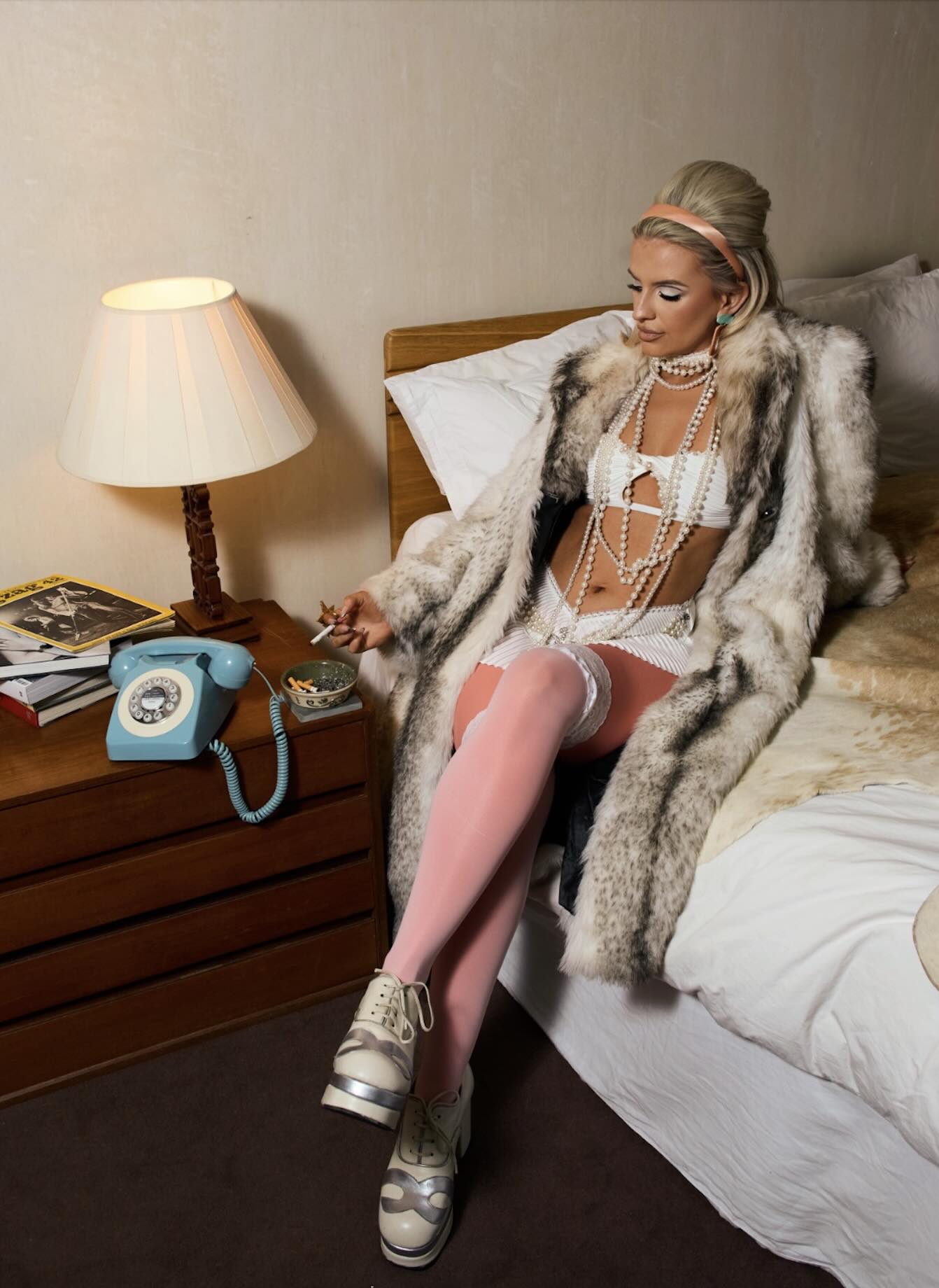
For International Women’s Day, Georgia fronts Don’t Cry Over Spilt Milk – a shoot rooted in the power of second-wave feminism and the women who changed everything in the 1970s. Set in a warm retro interior of shag carpets, bold colours and wood panelling, and wearing @pickupambers white feminist dress fresh from London Fashion Week, the concept reframes the domestic space as a site of quiet rebellion. The milk has spilt. Nobody’s crying. We sat down with Georgia to talk about femme visibility, the rights worth protecting, and what it actually means to move forward without mourning what broke.
Become a Nonchalant VIP for ad free browsing.
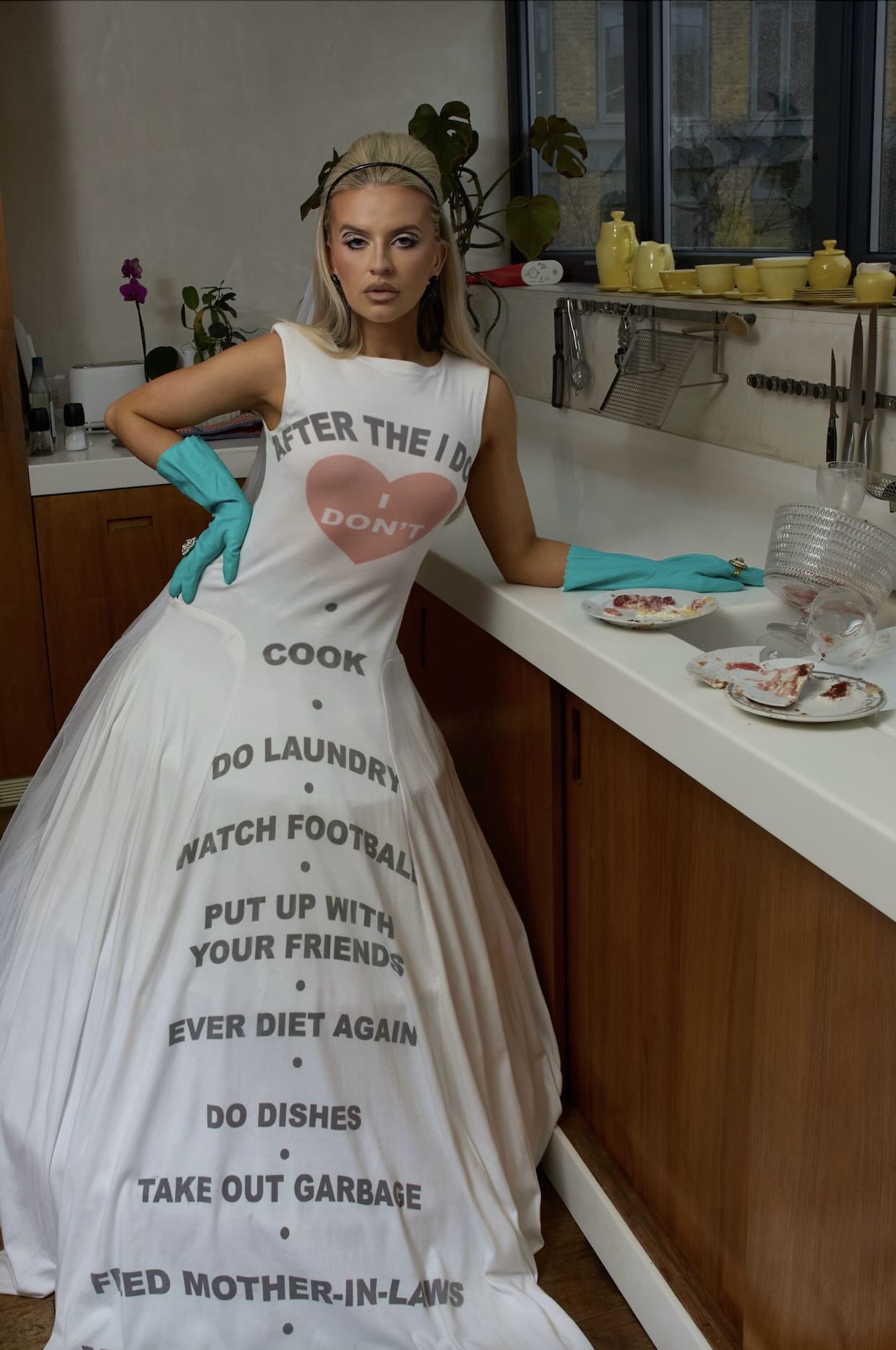
“Don’t Cry Over Spilt Milk” centres on women who refused to accept limiting roles. As a femme queer woman, do you feel like you’ve had to fight against a different kind of limiting role?
The main limiting role people try to give femme queer women is that we apparently don’t exist. I can be standing there with a bouncy blow and lip gloss, and someone will still ask me about my fella. Femininity isn’t a straight personality trait. You can love a blow-dry and also love women. Revolutionary stuff, really.
You’ve talked about scrolling through #lesbian in 2020 and not seeing anyone who looked like you. Five years on, do you think femme queer representation online has actually improved – or does it still have a way to go?
It’s definitely better. When I first searched #lesbian, it felt like there were about six of them online, and they all lived in Brooklyn with a carabiner. Now there’s way more representation, which is brilliant. The BBC commissioned I Kissed a Girl – a fully publicly funded broadcaster doing that feels pretty huge. They’ve got the gayest straight woman alive, Dannii Minogue, hosting it, and the show has created space for a whole range of queer voices. You’ve got Charley Marlowe narrating – already a massive queer digital voice for young women – reaching even more people. And breakout stars like Amy Spalding, a queer business owner running an amazing jewellery brand. The representation is amazing. The internet has improved, but it definitely still has room for about 400 more lesbians.
You may also like: In Photos: Inside Leztopia x Prism Of Pleasure
Article continues below.

The shoot references milestones like Roe v. Wade and the Equal Credit Opportunity Act. Which women’s rights issue feels most urgent to you personally right now?
For me, it always comes back to women having real control over their own bodies and their lives. The scary thing is that rights can move backwards – which means protecting the progress we’ve made is just as important as fighting for more.
You came out at 23 – relatively recently. How has being openly queer changed the kind of work you want to make or the brands you want to work with?
Coming out definitely made me a lot more mindful about the brands I work with. I love working with brands that genuinely support the queer community all year round, not just when Pride Month comes around. I also naturally work really closely with other queer creatives now. A lot of the people I collaborate with are queer, and there’s just such a nice energy when you’re surrounded by people who get it.
What does International Women’s Day actually mean to you?
Firstly, I love being a woman, and I love women. Any time we get to celebrate that and hype each other up, I’m there with bells and whistles.
If the women of the 1970s women’s lib movement could see queer femme women thriving online today, what do you think they’d make of it?
I feel like they’d be a bit confused by TikTok at first, but once they got it – definitely proud. We’re still causing chaos and rebelling, just now it’s with ring lights in hand and the ability to speak to hundreds of thousands of people at once.
You’ve become a reference point for femme queer women who didn’t see themselves represented – did you ever expect your visibility to mean that much to people?
Honestly, I never expected it at all. I was literally just posting my life online with no idea any of it would stick. But it’s really lovely if people feel seen because of it – that’s the best part of the internet.
IWD can feel quite surface-level these days. What would actually meaningful progress look like to you in 2026 – for women, and specifically for queer women?
For me it’s just about real support, not just posting a rainbow once a year. Supporting women and queer women in work, opportunities, and everyday life – not just on the internet.
Best and worst thing about being a queer woman on the internet right now – go.
Best: finding your people online and realising there are so many of us. Worst: the losers in the comment sections. Sometimes you open them and immediately regret it.
Don’t Cry Over Spilt Milk
Studio: @robertsplacestudios
Talent: @georgiawood__x
Creative Director, Producer & Stylist: @wohiviacreates
Photographer: @lilah.maii
MUA: @lilybellllle
Hair stylist: @aishamentu
Set designer: @ggoldbart
Styling assistant: @styledbynicolamorgan
Photography assistant: @yeshemckenna
Wardrobe: @terrydehavilland @pickupamber @70sstacks @viviennewestwood @empressmimilingerie @vickisarge @mango @ritas_vintage
Nonchalant x
This article was written by one of our creative team writers here at Nonchalant Magazine.
