
With Gwenda’s Garage, Nicky Hallett and Val Regan deliver a musical that feels keenly aware of its history and the women who shaped it. The play is set in a 1980s Sheffield garage run by three female mechanics, something that was novel then, and arguably not much less novel today. The piece celebrates women pushing boundaries while refusing to smooth over the rough edges of their struggle.
Watching it, I was struck by how well it captured the real challenges faced by women at the time, not just in their workplaces but in how they navigated identity, solidarity, and the political pressures of Thatcher’s Britain. There are some unfortunate parallels to the gender politics experienced by many in 2025, but also reminders of how far “we” have come.
Become a Nonchalant VIP for ad free browsing.
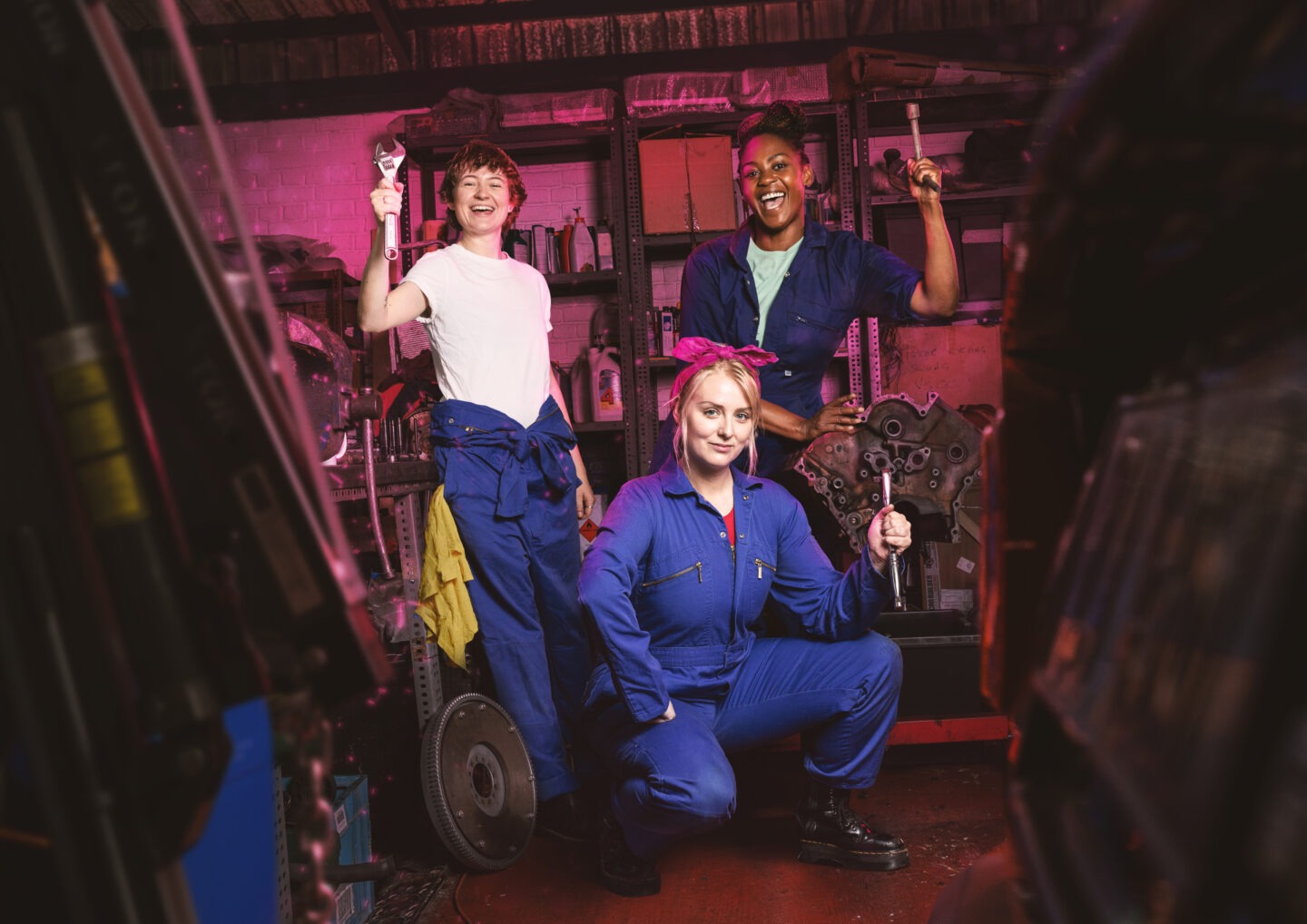
The hopefulness of the characters does not go amiss, but I couldn’t help feeling a degree of sadness knowing that, although times have moved forward, the people who inspired this story, if around today, would still have to fight for their right to exist as themselves to an extent. Of course, it is quite a lot different now legally. I just mean the feeling of today’s gender-political landscape.
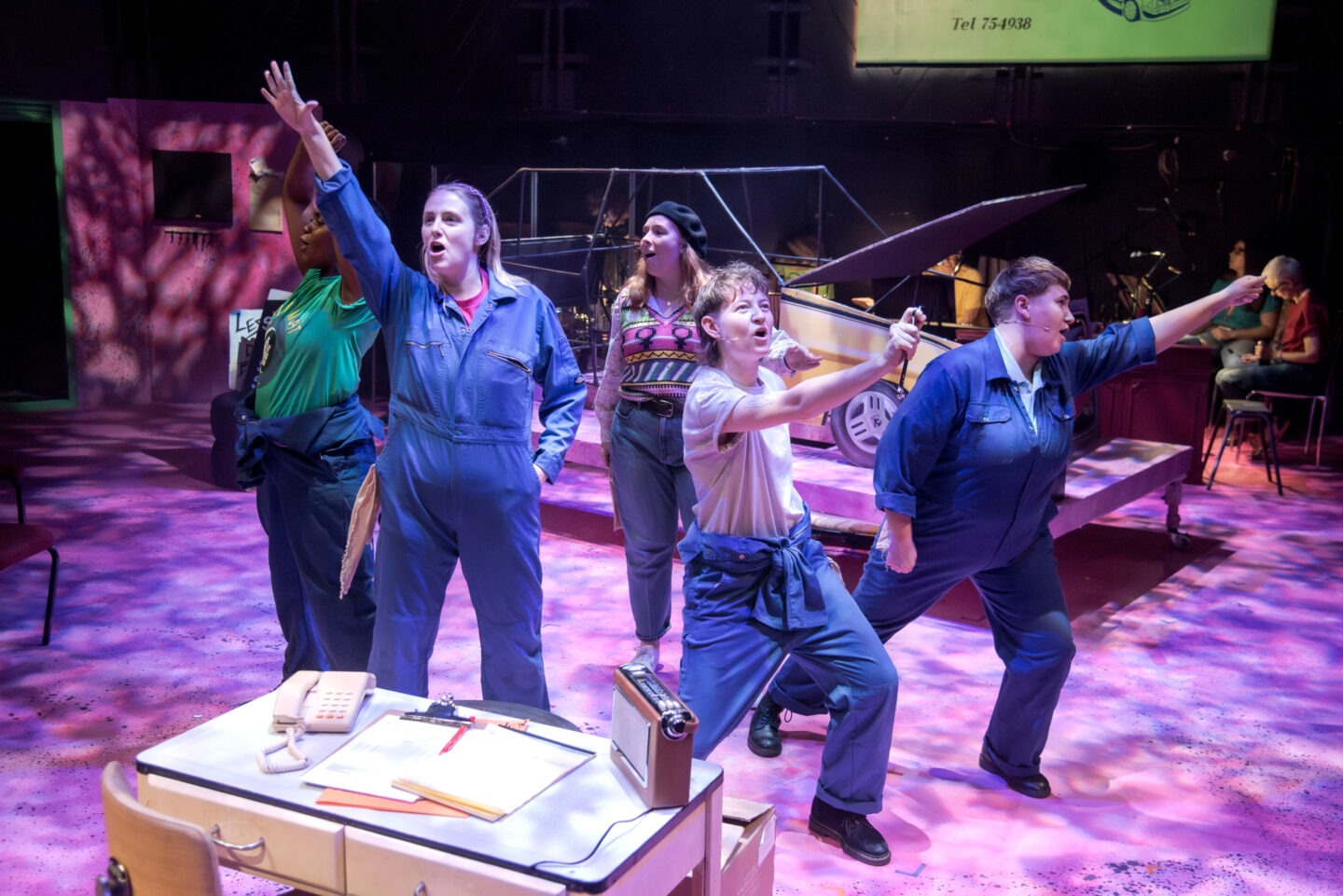
Against the backdrop of Tory rule and Section 28, the story becomes both personal and political, with rousing numbers like “We Had a Scam” and “Welcome to Sheffield” evoking that mix of defiance and togetherness that defined the era.
Related article: Private View: A Queer, Sexy, and Unsettling New Play Coming to Soho Theatre
“We Had a Scam” was one of my favourite songs, a funny, pokey number, a slight jest at the futile attempts of government to help people in ways that, although sometimes helpful, aren’t always. But also sort of could be? I guess there has never been a perfect system. I wonder if there ever will be. I digress.
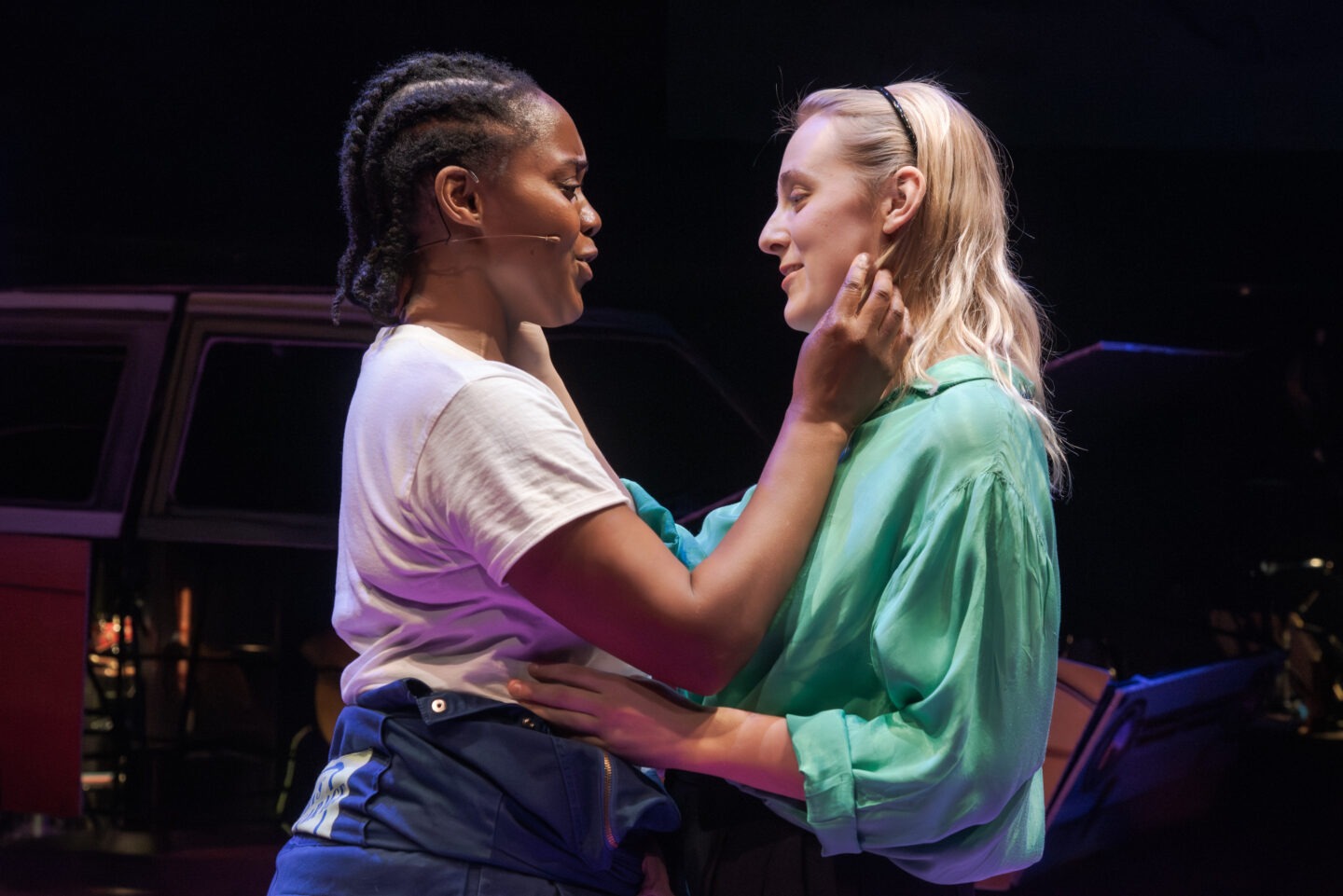
The heart of the show lies in the relationship between co-workers Bev (Nancy Brabin Platt) and Terry (Sia Kiwa). Bev’s longing to settle down and mother her foster kids contrasts beautifully with Terry’s fierce independence as a “family of one.” Their dynamic feels alive and layered. At some points I’m not sure they are meant to be together and am just hoping for the best. Their narrative touches on race, sexuality, and the cost of activism. At the start, it is hard to work out whether Terry’s defiance is true to the heart of her feelings, or whether she is wounded and challenged by the world she lives in and doesn’t believe any life other than the one she is living is possible. You find out which of those things is true in the play.
Article continues below.
I found myself wanting to know more about some of the other characters. Eva Scott’s Carol, the older leader of the garage, felt like she had a story itching to get out. There was a real depth there that I would have loved to see explored further. Likewise, Lucy Mackay’s Dipstick and Georgina Coram’s Feona brought warmth and humour, but their journeys sometimes felt rushed, as if we’d only skimmed the surface. If this were a sitcom or a series, I’d be eager to return each week just to learn more about their backstories and see how their bonds evolve.
As far as Southwark Playhouse productions go, Gwenda’s Garage made inventive use of its space. The set, while simple, was effective, cleverly designed to evoke the grit and camaraderie of the workshop without overcomplicating things. It felt like there were some limitations, maybe budget-related, but in a way that worked in the show’s favour, keeping the focus where it belongs: on the women, their work, and their collective drive. And in Thatcher’s Britain, this story was very unlikely to be one of working-class wealth.
The theatre itself was buzzing the night I attended, full of people of all genders, ages, and relationships, from groups of friends to older couples and queer families. It created a real sense of community, a fitting echo of the spirit on stage.
Rough-edged but full of heart, Jelena Budimir’s production captures the defiant resilience of women who refused to be sidelined. Gwenda’s Garage is not just a history play (in fact, it’s not entirely factual and doesn’t claim to be); it is a celebration of activism, friendship, and the small revolutions forged in everyday places.
You can still catch the play up until the 29th Nov 2025 – More info and tickets.
Nonchalant x

Molly is a full-time journalist based in London covering legal and business, alongside culture, music, arts, and tech.

