
Rain aside (standard Britain), we hope you’re keeping warm and looking after yourselves. Somehow, we’re already a month and a half into the year.
For LGBTQIA+ History Month, we’re spotlighting a handful of iconic names from our community. This is your reminder that queer history is rich, layered, and absolutely worth your time. Knowing who came before us matters. It gives context. It gives perspective. It gives us receipts.
Below is a small (very small) selection of LGBTQIA+ figures to read up on this February.
Become a Nonchalant VIP for ad free browsing.
Disclaimer: This is by no means an exhaustive list.
Marsha P. Johnson
Marsha P. Johnson (1945–1992) was a trailblazing activist, performer and self-described “gay person.” A Black transgender woman, she was a prominent figure in New York City’s LGBTQIA+ scene and an early advocate for gay rights. She was also involved in AIDS activism and worked to support those living with HIV at a time when stigma was at its peak.
Johnson was a central figure in the movement following the 1969 Stonewall uprising and later co-founded STAR (Street Transvestite Action Revolutionaries). She experienced periods of homelessness and struggled with her mental health. Her body was found in the Hudson River in 1992; her death was later reclassified from suicide to “undetermined.”
Few names carry as much weight in queer history as Marsha P. Johnson’s — and for good reason.
Source: National Women’s History Museum
Article continues below.
You may also like: Podcasts to educate yourself this LGBTQ+ History Month
Sylvia Rivera
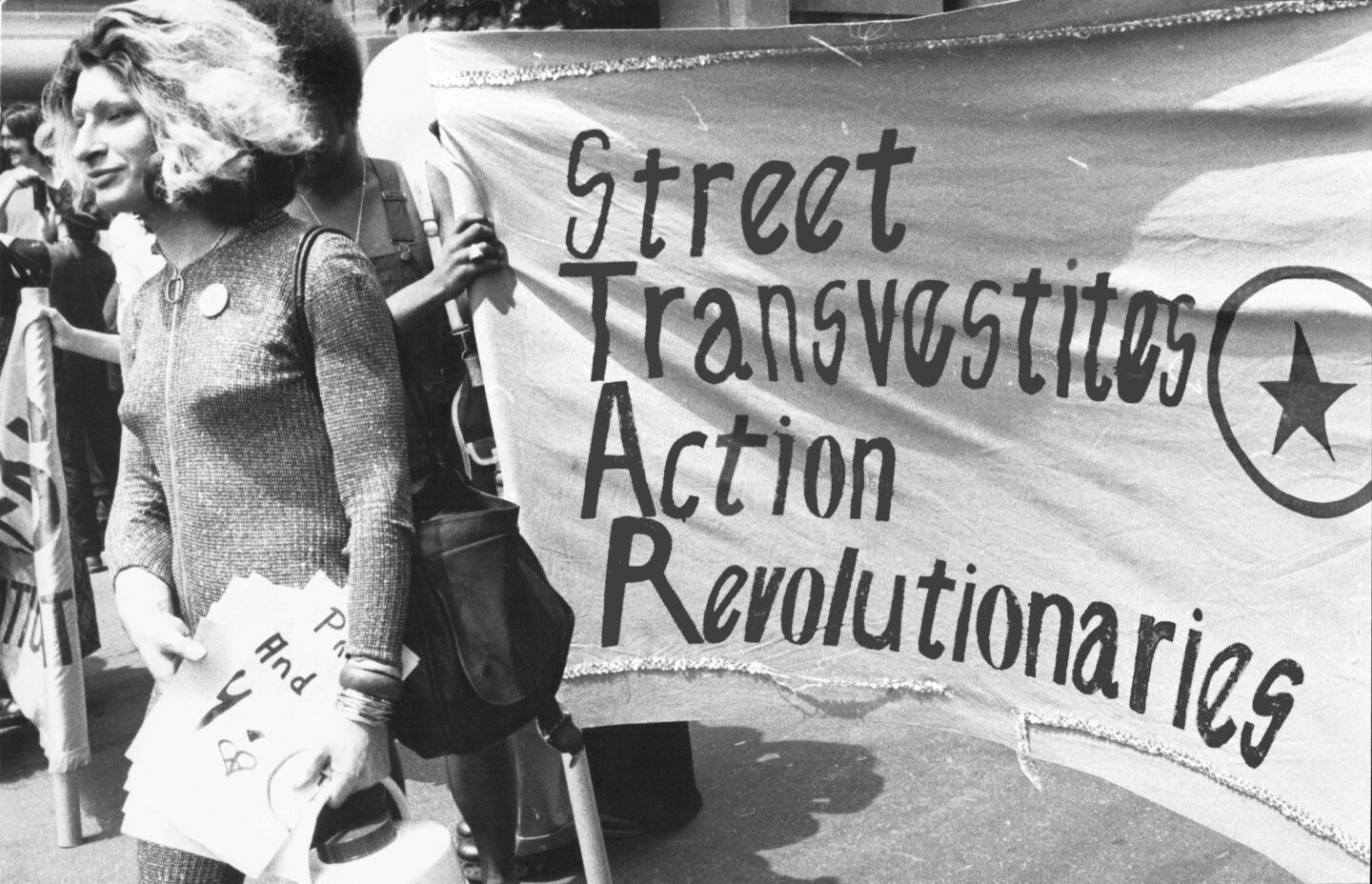
Sylvia Rivera (1951–2002) was a Venezuelan and Puerto Rican activist who fought tirelessly for transgender rights. She was present during the 1969 Stonewall uprising and, alongside Marsha P. Johnson, co-founded STAR. The organisation created housing and support networks for homeless trans youth – particularly trans women of colour.
Rivera experienced homelessness herself and was outspoken about the exclusion of trans people from parts of the early gay rights movement. She pushed – loudly and unapologetically – for inclusion.
Rivera and Johnson were organising during a period when being an LGBTQIA+ woman of colour in New York City came with intense discrimination and danger. Their legacy speaks for itself.
Source: Smithsonian National Portrait Gallery; Encyclopaedia Britannica
You may also like: Sylvia Townsend Warner is Getting a Statue – And It’s a Big Gay Deal
Audre Lorde
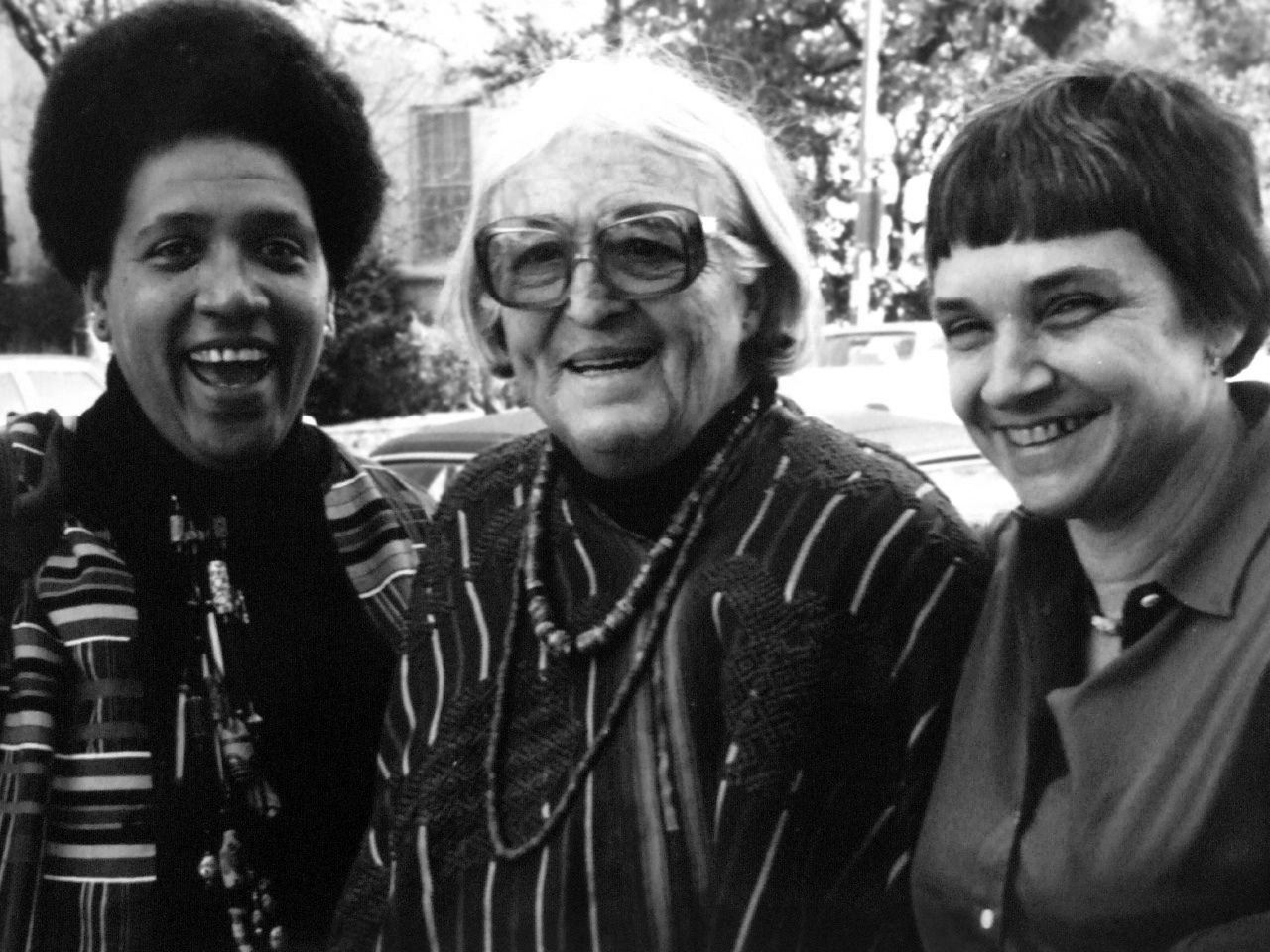
Audre Lorde (1934–1992) described herself as “Black, lesbian, mother, warrior, poet.” That sentence alone does a lot.
A New York–born writer and activist, Lorde was anthologised by Langston Hughes, praised by Adrienne Rich, and connected with James Baldwin. She published poetry collections, including The Black Unicorn and powerful essays such as “The Uses of the Erotic: The Erotic as Power.” Her memoir The Cancer Journals documents her experience with breast cancer.
In 1991, she became New York State Poet Laureate. Her writing continues to shape feminist and queer theory today.
Source: Penguin; Poetry Foundation
Alan Turing
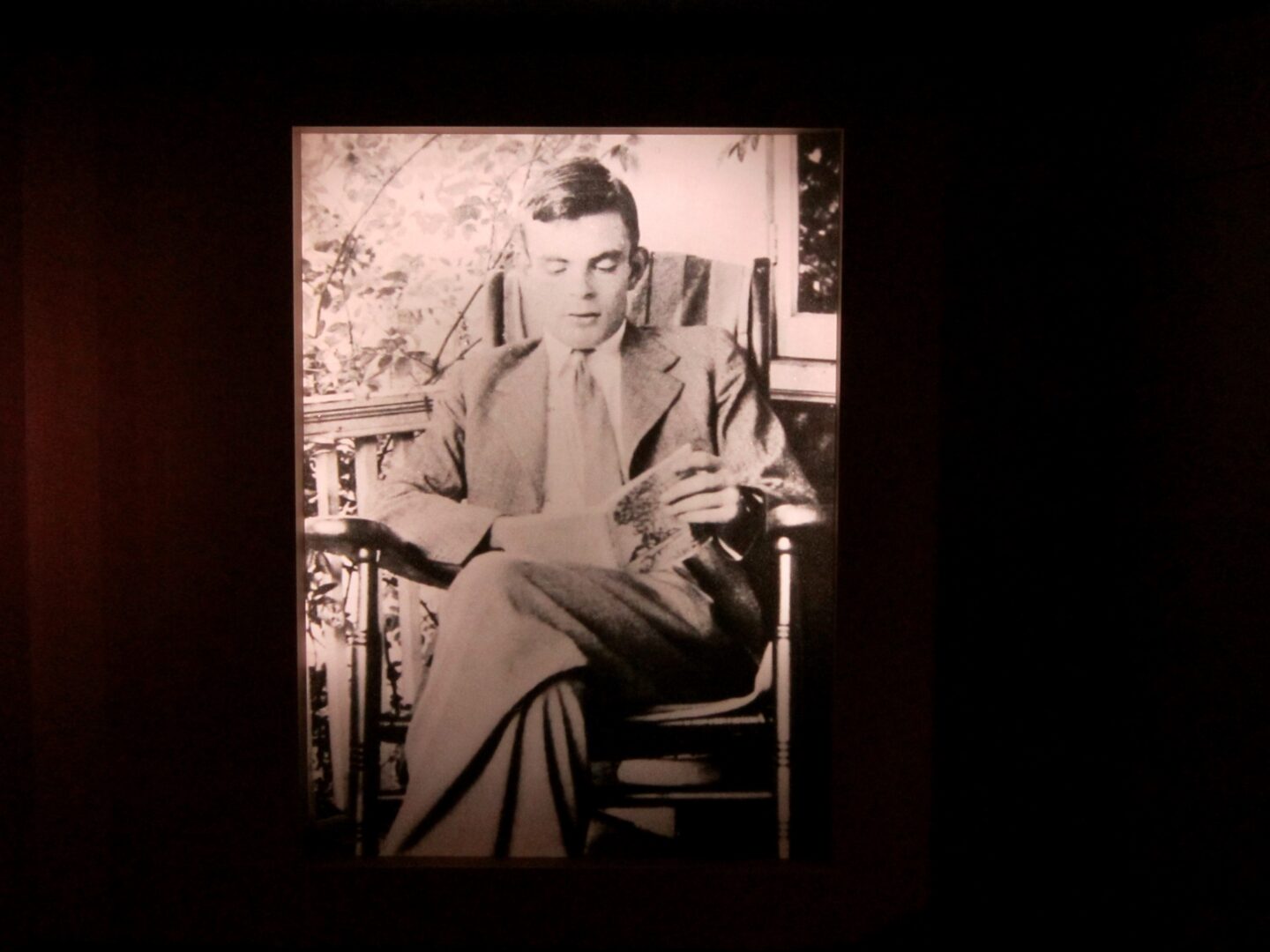
Alan Turing (1912–1954) is widely recognised as a foundational figure in computer science. During the Second World War, his work at Bletchley Park decoding the German Enigma cypher is estimated to have shortened the war by two to four years.
He studied at Cambridge and later worked at the University of Manchester, developing early computing theory and exploring what he described as “machines that can think.” (Safe to say he’d have opinions on modern AI.)
In 1952, Turing was convicted of “gross indecency” for homosexual acts. He was chemically castrated and barred from continuing some of his work. He died in 1954 from cyanide poisoning, widely ruled a suicide.
In 2013, he received a posthumous royal pardon, and in 2017, the so-called “Turing Law” extended pardons to thousands of men convicted under historic anti-gay laws in the UK.
Source: The Alan Turing Institute; Royal British Legion
Oscar Wilde
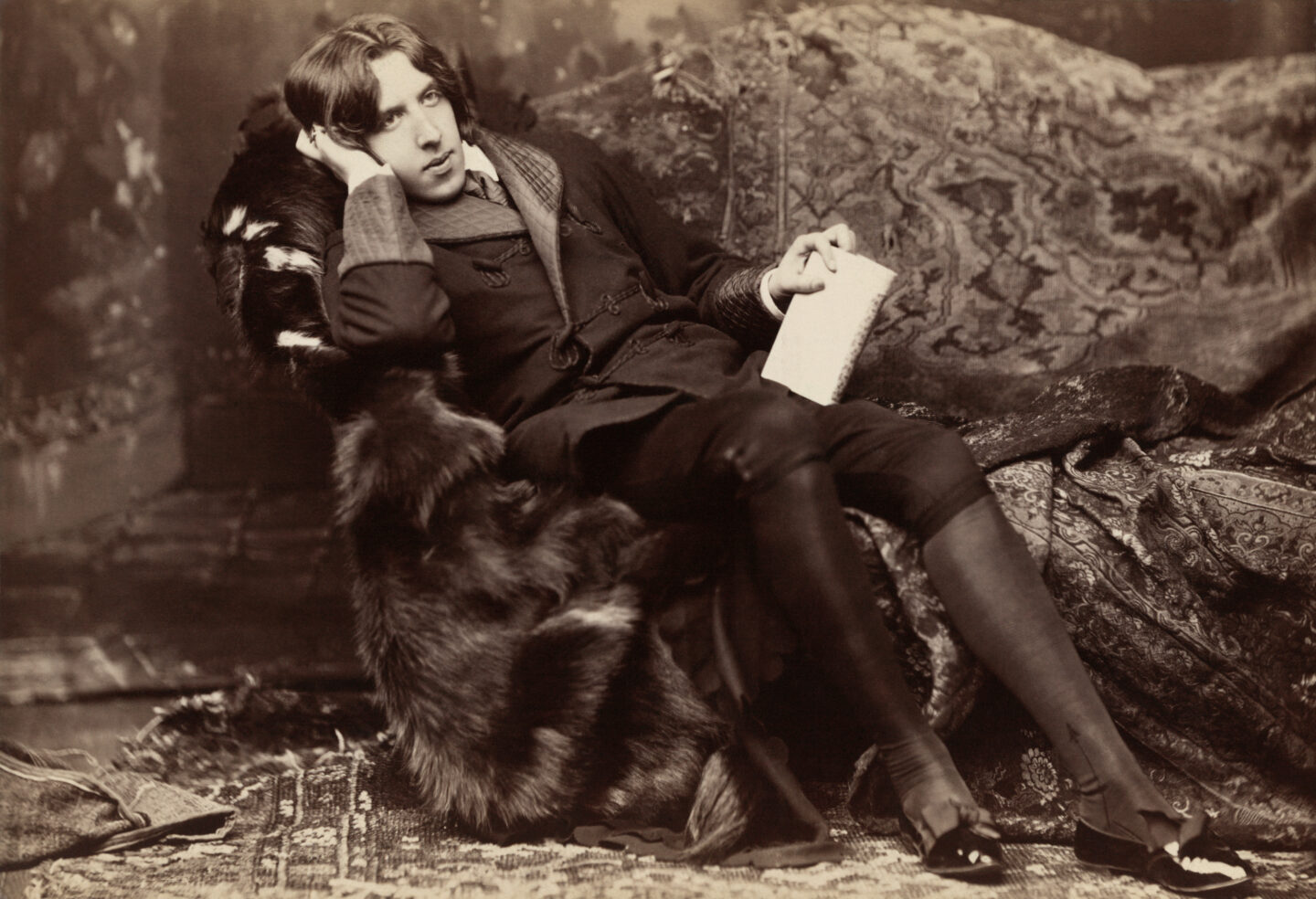
Oscar Wilde (1854-1900) was a poet, playwright and novelist. A couple of his most prominent works include The Picture of Dorian Gray – his only novel – and The Importance of Being Earnest, a play. He attended Oxford and advocated for “art for art’s sake.” He was arrested for gross indecency (believed to have had both writing and activities involving homosexuality between men) in 1895 and put to two years’ hard labour. Upon his release, he moved to France. He died in 1900, suddenly, of a meningitis-caused ear infection. Oscar Wilde is a prominent figure in the literary scene.
Our information comes from Britannica
Freddie Mercury
Freddie Mercury (1946-1991) is possibly one of the most prominent musical LGBTQIA+ icons out there. He was an LGBTQIA+ man of colour and the lead singer of the band Queen. One of Queen’s biggest events they took part in was Live Aid, a charity concert performed in 1985. Mercury was a man with strong stage presence and iconic outfits, and it’s arguable that “Bohemian Rhapsody” – one of Queen’s most iconic songs – is quintessentially Freddie Mercury: outside the box, memorable and unique. In 1991, Freddie Mercury announced that he had AIDS and died only a day later in London. Queen is undoubtedly one of the most iconic rock bands in history, and Freddie Mercury is one of the most iconic LGBTIQA+ musicians and people in general.
Our information comes from Britannica
Final thoughts
Still want to know more? Good. Go beyond this list, and explore our other LGBTQIA+ history articles – recent, historic, and everything in between.
You’re now slightly better armed for the group chat, family dinners, or that one friend who “didn’t know.” If something here caught your attention, follow it.
Thanks for being here with us this LGBTQIA+ History Month. We’re learning alongside you.
Nonchalant x

Jo Carter is a versatile and curious freelance writer, covering everything from queer culture and lifestyle to pop culture and trending stories.
