
Sexuality is rarely discovered in one single moment.
Most people don’t discover their sexuality in one single moment. More often, it reveals itself slowly: through the things we love, the people we can’t stop thinking about, and the feelings we spend years trying to make sense of.
The signs are often there, even if we don’t notice them.
For me, those signs weren’t subtle at all. You could call them neon yellow, bold, and impossible to miss. Still, it took me years to realise I was bisexual.
In this article, I’m taking you through the nine times my brain tried to tell me I wasn’t straight and the one time I finally decided to listen.
Bratz dolls, scissoring, and plastic orgies
Like many sapphic women, my story started when I was just a little girl.
Whenever I was alone in my girly sanctuary, the room I shared with my older sister, the Bratz dolls would come out. Of course, they all had glamorous jobs like rock star or fashion journalist, and their wardrobes were full of beaded handbags, low-rise jeans, baby tees, and detachable feet-shoes.
Amongst my impressive collection of female Bratz dolls stood one Bratz boy, who at the age of 7 I found terrifyingly underwhelming. In many of my stories, this sole Bratz Boy, Cameron, played the role of “Boyfriend” to many, many dolls. Maybe he was the original fuckboy?
Article continues below.




But this arrangement simply would not do. My dolls deserved better than never-ending polyamorous drama with one boring boy (no offence, Cameron). So, I founded my own tiny sapphic Bratz utopia, where scissoring, naked pool parties, and plastic orgies were common practice.
Who could have possibly guessed that my Bratz were living their best not-so-PG lives on the regular? Turns out, basically everyone. Apparently, I was far from the only girl who considered doll scissoring a top-tier after-school activity.
This was the first sign, among many, that my journey with sexuality would not be as straightforward as I expected. No pun intended.
My very gay scrapbooking era
Once upon a time, before the internet ruled our lives, fashion retailers would send actual catalogues through the post. Wild, right? Thus began what I now fondly refer to as my very gay scrapbooking era.
Between the ages of 6 and 8, I poured my soul into a groundbreaking art project: snipping out every picture of female underwear models I could find and arranging them into collages.
This was my master project. The thing that would foreshadow years of questioning, denial, frustration and an ongoing fascination for the female form.
Looking back, I honestly don’t know how my mum managed to act surprised when I came out as bisexual, considering I used to parade my scrapbooking masterpieces in front of her for years.
But then again, even I was in denial and remembered it as me simply being a creative and curious child.
You may also like: How to tell whether you’re a bisexual woman
Tiny feminists and future women-lover
Picture this: I’m 9 years old, banished to the back of the classroom yet again for being boisterous and chatty. Turns out, undiagnosed ADHD will do that to a girl, who knew?
So there I am, sat alone at the back, daydreaming out the window and absolutely bursting to discuss the latest Winx Club episode with literally anyone who would listen.
Then my teacher drops the cursed words, the sentence that always made me twitch: “Are there any strong boys who can help me carry the chairs to the library room?”
Every time she said it, my outrage grew stronger. Had she not noticed that we girls were just as strong as the boys? I’d proven my chair-carrying prowess more times than I could count.
My hand shoots up like a rocket, and before anyone can stop me, I’m screaming out: “I can do it! I will do it.” Who needs a boy when you’ve got a strong girl on the case?
So, I spent years loudly insisting girls were just as capable as boys. It would take longer to admit that I also really, really enjoyed looking at them.
My shrine to Britney Spears, Beyoncé and Shakira
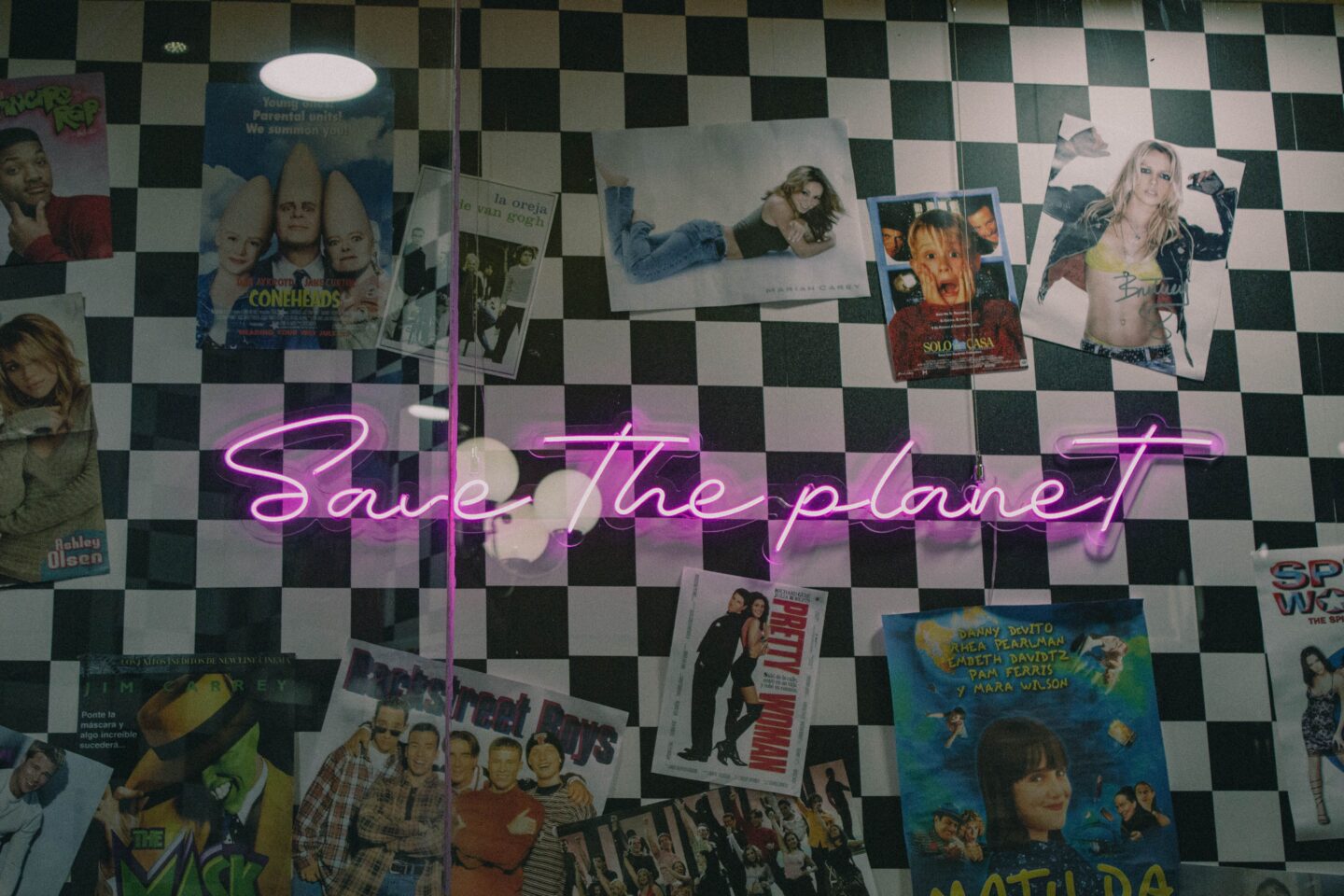
While I was busy practicing microfeminism at school, my bedroom, my sacred haven, was plastered wall to wall with posters of pop girlies, all serving girl power, belly-button rings, and crop top fashion.
This was a shrine to girls and girls only. Not a man in sight. Don’t get me wrong, my love for Lucas and Nathan Scott was real, but their faces were banished from my walls; my room was strictly dedicated to pop princesses.
After all, Beyoncé herself had declared it in “Independent Women,” a song I played on repeat, right alongside Britney’s “Toxic,” while I spent hours in my room playing “Badass Spy / Charlie’s Angel Undercover Agent.”
Britney, Beyoncé, and Shakira had spoken, and who was I to ignore their call? I had to be a strong-willed, independent girl who only had time for other girls. And if that meant spending hours gazing at photos of them in low-rise jeans and glitter halter tops, well, I was simply doing my homework.
My taste in films and TV shows
This obsession I had with girl power and hyperfeminine divas didn’t stop at music and posters; it completely took over my taste in movies and TV shows from a very young age.
My mum, a tech-savvy working-class hero, didn’t buy or rent DVDs; she pirated movies for my sister and me. Please don’t lock her up; we all did it.
She’d browse the tween and teen categories, picking out movies she thought I’d like. She knew I fancied myself a secret agent, and so she downloaded a film that would change the entire trajectory of my life (not even exaggerating): D.E.B.S.
Imagine Charlie’s Angels, but make everyone a college girl in a plaid miniskirt. Amy, Max, Janet and Dominique attend a secret academy where they’re trained to become elite spies. They’re charged with hunting down the infamous supervillain, Lucy Diamond, but it becomes considerably more complicated when level-headed, practical spy-in-chief Amy starts to fall for the very woman she’s supposed to capture.
D.E.B.S. had everything I craved in a movie and then some. It was the first teen film I ever saw with a lesbian romance.
From then on, I was obsessed with lesbian couples in the media. Having a sister five years older as my babysitter (and commander of the remote) meant I watched things most parents would call “extremely inappropriate.”
And so my lesbian cinematic education continued: Channel 4’s Sugar Rush (which, for the record, no 9-year-old should be watching), Skins, and, of course, Jennifer’s Body (a certified sexual awakening).
Incriminating search history and secret folders (aka my digital coming-of-age)
At 12, I inherited my mum’s old PC, completely unaware that search history was even a thing. If you’d peeked inside, you’d have found something like this:
- Megan Fox.
- Megan Fox Jennifer’s Body kiss.
- Jennifer’s Body kissing scene.
- American Pie girls kissing.
- Scarlett Johansson.
- Scarlett Johansson hot.
- Scarlett Johansson bikini.
Looking back, I have to admire how my brain kept insisting, No, no, this is just… research.
Research for what, exactly?
This also coincided with my blossoming sexual desires and my newfound passion for “solo activities” (always accompanied by a deep sense of shame). Most of these adventures took place while exploring a secret folder I’d curated, filled exclusively with pictures of Scarlett Johansson. This was the brightest and biggest neon sign to date, and still I was completely blind to it.
Practice kisses and sleepovers
Before I ever kissed anyone, I’d already had years of practice. Mostly with the back of my hand. Occasionally with posters of Britney Spears and Beyoncé. You know. Normal straight-girl activities.
Then, when I was thirteen, there was the sleepover.
If you’ve ever been a teenage girl, you know the kind. Sleeping bags scattered across the floor. Too much sugar, too little sleep, whispered conversations that somehow felt like the most important discussions in human history.
She was fourteen, effortlessly cool in that mysterious way only girls one year older can be. I idolised her. I wanted to dress like her, make her laugh, have her think I was funny, interesting and mature enough to be her friend. I thought I wanted to be her. Turns out, what I really wanted was to kiss her.
At some point during the evening, we did. Just a quick peck. Nothing dramatic. The kind of thing teenage girls have been doing at sleepovers for generations for “practice.”
To make the story even more dramatic, I introduced her to my stepbrother not long after. They started dating.
Suddenly, I discovered a brand-new emotion I couldn’t quite name. I told myself I was just annoyed my friend wasn’t spending as much time with me anymore. Totally plausible. Completely normal. Really, it was my first taste of jealousy, and it was bitter.
My life after watching Imagine Me & You
By then, I knew I liked boys (high school hormones and all), but I absolutely refused to make them the centre of my universe.
My crushes were top-secret, and the only men allowed in my daydreams were Stiles from Teen Wolf and the entire lineup of One Direction.
Even though I’d been “flicking my bean” to images of women for years, I was still deep in the trenches of denial. I knew I found boys attractive. Girls, though, were apparently just… aesthetically pleasing. Or inspirational. Or really pretty, in a platonic kinda way. Or whatever excuse my brain was coming up with at the time.
Then I watched Imagine Me & You, the film that changed everything. As a true Rom-Com addict, I’d grown up watching straight couples fall in love; this time there was a girl getting the girl.
It was romance. It was yearning. It was real love. And maybe, just maybe, I could be attracted to girls, marry one, live with one, fall in love… Because it did exist, I could see it right there. Before, whenever I pictured my future, the default partner was always a man. For the first time, I closed my eyes and the hand I was holding belonged to a woman.
Turning 18: a crush, one pivotal make-out session and a coming out (tears and snot edition)
This is the story of how my 18th birthday party ended with me, covered in tears and snot, drunkenly coming out to my older sister.
By senior year, I’d finally come to terms with the fact that I was also into girls. Thanks to the internet, feminism, gay marriage being legal, and open-minded (sometimes openly queer) friends, I started casually dropping the “I’m into girls too” bomb. It would still take years to stop doubting my bisexuality, but progress is progress.
We kissed in the kitchen of my tiny local community centre while everyone else was outside drinking. Not exactly the rom-com moment I had expected, but life rarely works that way. The kiss itself lasted only a few seconds. The identity crisis that followed lasted considerably longer.
Within minutes, my brain had spiralled into complete chaos. She hadn’t been drinking, so surely that kiss meant something. Maybe she liked me. Maybe we were destined to be together. Maybe this was the start of a great love story. Girls were too beautiful, love was too complicated, and I was absolutely unequipped to deal with any of it.
I had been bottling everything up for too long, and it finally blew up. I had opened the floodgates, and there was no closing them.
So there I was, eighteen years old, mascara running halfway down my face, crying so hard I could barely get my words out, finally blurting to my older sister that I liked girls.
To me, it felt monumental. I’d spent years questioning, denying, overthinking, and trying to explain away every obvious sign my brain had been throwing at me. Saying the words out loud felt like crossing a point of no return.
My sister stayed calm and gentle. She hugged me, told me it was okay, that it is difficult now, but it gets easier. She reminded me that she loved me and that all she wanted was for me to be happy.
Looking back, I think that’s exactly what I needed. Just someone I loved telling me everything was going to be okay.
The one time I finally listened
The funny thing about being bisexual isn’t that I didn’t know.
It’s that I spent years coming up with more and more creative stories for why women fascinated me. They were just prettier than men. I just admired them. I was just jealous. I was just really invested in female friendships. I just thought Scarlett Johansson was objectively beautiful. Every clue came with an excuse.
Coming out at eighteen wasn’t the end of the story either. If anything, it was the beginning of another one.
It took years to untangle compulsory heterosexuality and doubt. Years of wondering whether I was “bisexual enough,” whether my attraction to women was real enough, whether I somehow needed more proof. I’d take one step forward, then two steps back, only to find myself asking the same questions all over again.
And then, one day, I stopped being afraid of my attraction to women. I let myself flirt. I let myself date. I let myself be intimate with a woman without turning it into an existential crisis. It turns out bisexuality wasn’t scary or difficult at all; it was freeing.
If any part of this story felt familiar to you, like the doll scissoring or practicing sapphic kisses, remember that you’re not alone.
And if you enjoyed this story, you might also love these other tales of queer self-discovery, identity, and finding your way to yourself: Am I a lesbian? Coming Out Stories.
Until then, stay proud!
Elisa x
You may also like

Elisa is a French media professional, a proud bisexual, eternal feminist, and unapologetic lover of women (it kinda comes with the title). She’s obsessed with all things pop culture (films, books, TV, music…) and could talk for hours about everything from the progressive politics of Shrek to the link between girlhood and monstrosity in media. She believes that content is always political, that queer people have always existed, and are not going anywhere. Through her work with Nonchalant, her goal is to uplift creative, powerful, and diverse queer voices, because our stories deserve the spotlight.

