
She won the Mercury Prize at twenty. She’s bisexual, trilingual, and one of the most significant artists this country has produced. Now she’s found the dancefloor. Keep up.
Arlo Parks has spent the better part of four years being described as “rising” and “vital” and “one to watch,” which is exhausting for anyone, let alone someone who was processing grief and mental illness through spare bedroom recordings while most people her age were working out how to do laundry. She doesn’t seem exhausted, though. She seems like someone who has found the right room.
That room, lately, has been the nightclub.
How old is Arlo Parks?
Arlo Parks was born on 9 August 2000, which makes her 25. She is, depending on your generational taxonomy, either the oldest possible Gen Z or proof that the category is meaningless. What she is, more usefully, is a person who released a critically acclaimed debut album when she was twenty, won one of British music’s most prestigious prizes at twenty-one, and is now – with third album Ambiguous Desire out in April 2026 – doing the thing that takes most artists a decade to attempt: sounding completely different and completely herself at the same time.
Become a Nonchalant VIP for ad free browsing.
What is Arlo Parks’ real name?
Her given name is Anaïs Oluwatoyin Estelle Marinho. She is of Nigerian, Chadian, and French heritage – her mother was born in Paris, and Parks learned to speak French before she learned English. She was raised in Hammersmith, West London, attended Latymer Upper School, and completed her A Levels in 2019 at Ashbourne College. The stage name came later. The songs, apparently, came first.
On her Spotify profile, written in her own words: she spent most of secondary school “feeling like that Black kid who couldn’t dance for shit, listening to too much music.” It is, perhaps, ironic that her third album is almost entirely about dancing.
Is Arlo Parks queer? What is her sexuality?
Yes. Parks identifies as a bisexual woman and has spoken about her queer identity consistently and without fanfare for years. This is not a revelation she parcels out for press cycles – it is simply part of how she understands herself and, by extension, her music.
“My queer identity has always made its way into my music because it’s who I am. I feel like music was a journal for me – a way I processed the world and became more comfortable and confident with who I was.”
– Arlo Parks, Spotify / Glow
She has cited queer literature and film as ongoing influences, and speaks warmly about queer club culture as a site of community and self-discovery – which is not incidental to Ambiguous Desire, an album she has described as shaped by the euphoria of nocturnal queer spaces. She has mentioned Beverly Glenn-Copeland and the late SOPHIE as artists who opened something up for her. “Music builds connection,” she has said, “especially for queer people who find real comfort in their chosen family.”
Where did Arlo Parks come from? The early career explained.
She appeared, essentially, fully formed. Parks began releasing music in 2018 while she was still at school, her early EPs – Super Sad Generation and Sophie – establishing a voice that was at once conversational and literary, intimate without being confessional in the way that word is usually deployed as a slight.
Her debut album, Collapsed in Sunbeams, arrived in January 2021 to the kind of reception that is both thrilling and faintly terrifying – unanimous, effusive, and impossible to sustain. It debuted at number three on the UK Albums Chart, earned nominations for Best New Artist, Album of the Year, and Best British Female Solo Artist at the Brit Awards. She won none of those. But she won the Mercury Prize, which carries a different kind of weight: it’s awarded by people who care very specifically about music, and it said something clear.
Arlo Parks discography
Album Year Notable for Collapsed in Sunbeams Mercury 2021 Debut. UK #3. Brit nominations. Won the Mercury Prize. “Black Dog,” “Eugene.” My Soft Machine 2023 Sophomore record. Two Grammy nominations. A gentler record, more interior. Ambiguous Desire 2026 Third album. Club-influenced, queer hedonism as framework, produced with Baird and Paul Epworth.
If you are looking for some more queer artists to listen to, try reading this, ‘The queer and queer-beloved artists nominated at the BRIT Awards 2026.’
Ambiguous Desire: what is the new album about?
Ambiguous Desire is, in the plainest possible terms, an album about what happens when you stop being afraid to take up space. Parks spent two years writing it in nightclubs – Nowadays and Bossa Nova Civic Club in New York, Venue MOT in London – and the record carries the particular texture of those hours: the bass you feel before you hear it, the way a stranger’s problem becomes briefly, beautifully your problem too, the 5am comedown that is somehow both ending and beginning.
Article continues below.
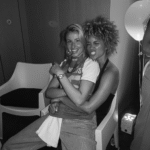


The record draws on the queer hedonism of Larry Levan’s Paradise Garage, the moody British beats of The Streets and Burial, the glittering synth catharsis of LCD Soundsystem. It was produced primarily with Baird, with additional production from Paul Epworth – the man behind much of Adele – and Buddy Ross, who has worked with Frank Ocean. The resulting sound is her most experimental: electronic, club-inflected, still anchored by her plaintive guitar and that unmistakable voice, but doing something new with the room it takes up.
“I feel most myself in my body when I’m dancing, and being in those expressive spaces gave me the confidence to explore the artists that I’ve loved forever but haven’t been able to showcase in my music before. The record is me learning to have more fun – embracing the light as well as the shade.”
– Arlo Parks on Ambiguous Desire
There is also a story at the centre of it. One summer night in New York, Parks found herself standing near a group of strangers consoling a friend through some tangled romantic drama. She said something – “I hope you’re okay” – and got drawn in. By the end, they were all on the dancefloor together, having collectively decided the friend was better off without him. That’s the album. That’s actually what it is.
Awards and accolades: the Mercury Prize, the Grammys, and the rest
Parks won the Mercury Prize in 2021 for Collapsed in Sunbeams. She received two Grammy nominations for that album and two more for My Soft Machine. She has been nominated for Ivor Novello Awards. She has opened for Harry Styles and Billie Eilish in arenas and headlined her own tours in clubs and theatres. The trajectory is not typical.
On awards: Parks has always seemed faintly bemused by the machinery of recognition, which is probably the correct response. The music has not been written towards prizes. The prizes have arrived anyway.
Why does Arlo Parks matter?
There is a version of this question that answers itself through the accolades. But that’s not quite it. Parks matters because she has consistently refused the binary between accessibility and seriousness. Her songs are not difficult – they are, in fact, extraordinarily listenable – but they do not flatter the listener with simplicity. They are full of specific, literary detail; they name things that many people feel but few name; they do not pretend that being young and queer and alive is uncomplicated, but they also do not perform suffering as a credential.
At 25, she is three albums in and operating with the confidence of someone who has already done the interesting thing once and knows how to do it again differently. Ambiguous Desire is the sound of someone who has stopped waiting to be given permission to be louder.
She’s not here to reassure you. She’s here to make you dance a little first, and then think about it on the way home.
Nonchalant x
You may also like

Babs heads up Logistics and Product here at Nonchalant Magazine.
