
If Halloween left you craving vampires, sapphic undertones and maybe even a bit of Victorian literature, this book might be the perfect one for you. What if I told you that a sapphic Victorian vampire novella helped inspire Dracula? Yes, Bram Stoker’s famous novel, which has inspired countless interpretations of the vampire story, owes a debt to the spooky tale of a lesbian vampire.
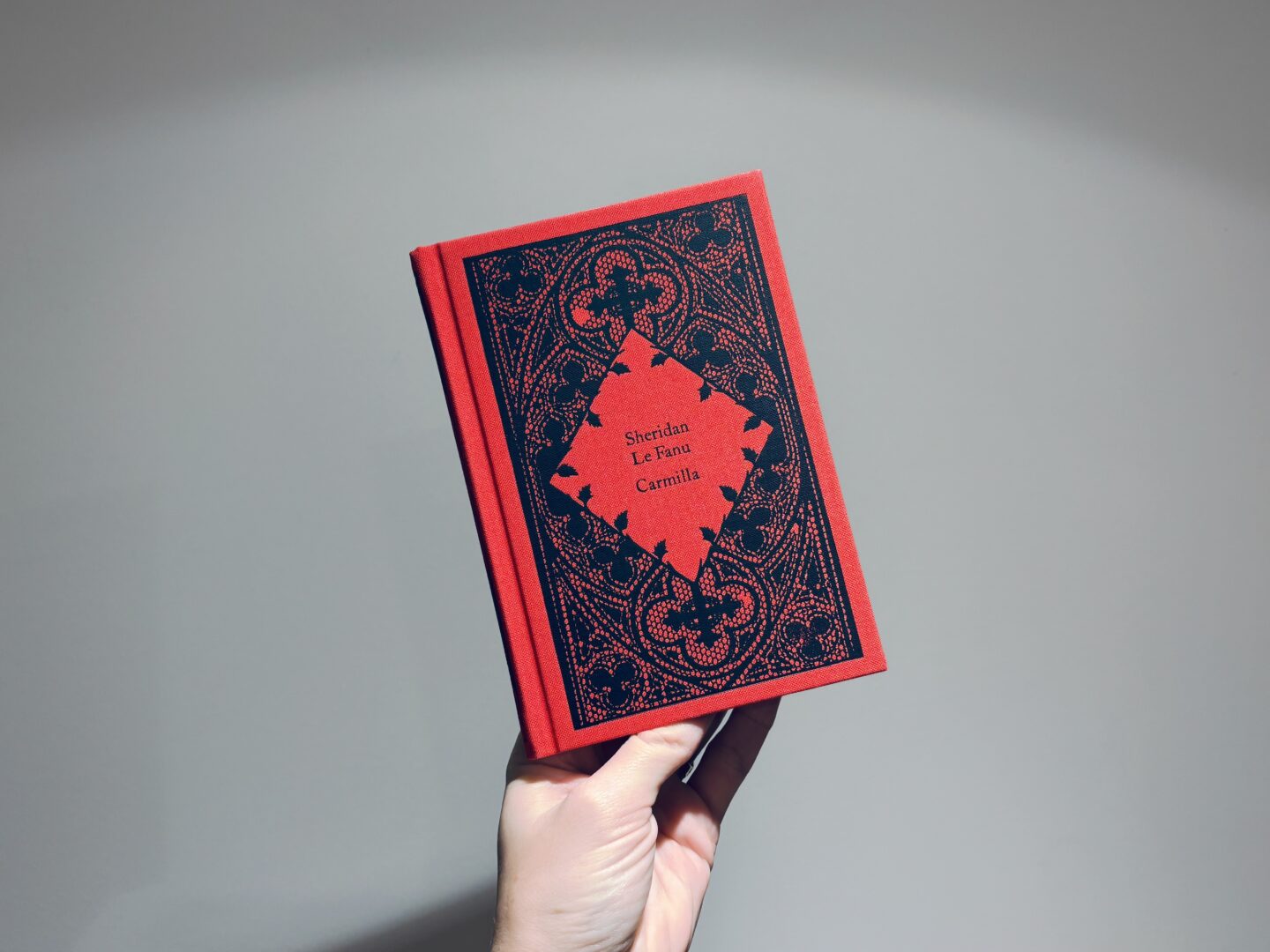
Pre-dating Dracula by 25 years is the OG lesbian vampire, Carmilla. Be warned, it is a horror novella, with a heavy-stomached feeling of dread throughout, but it’s deliciously seductive as well. It has inspired several TV, film and media adaptations. Recently, internet sleuths wondered whether actress Lili Reinhart was thinking of Carmilla when she kept mentioning a lesbian vampire movie she wants to make while publicising The Love Hypothesis. Read on to find out why we loved it, but some spoilers and suggestive details may lurk.
What’s Carmilla about?
First serialised between 1871 and 1872 in The Dark Blue, a monthly London literary magazine, the novella follows a young woman pursued by Carmilla, a vampire who cunningly shapeshifts to disguise her true identity (she also goes by Millarca and Mircalla, all anagrams of one another).
Full of dread and quintessentially gothic, the novella opens with Dr Hesselius’s casebook, which introduces the first-person account written to him by our narrator, Laura. Working backwards, the reader is then placed deep in the Austrian forest, where Laura lives an isolated life in a secluded castle with her father. One night, a horse-drawn carriage crashes, carrying an unexpected guest: the mysterious Carmilla.
Carmilla is undeniably beautiful, and 19-year-old Laura becomes the object of both her affection and her predation. Their companionship blurs from friendship into something more entrancing and seductive, creating the grey area between seduction and predation that vampire stories are so known for.
But as Carmilla’s behaviour becomes increasingly feverish and volatile, and she starts sleepwalking, Laura also begins to experience strange nightmares and sensations: “I felt myself a changed girl. A strange melancholy was stealing over me, a melancholy that I would not have interrupted. Dim thoughts of death began to open…” Meanwhile, a peculiar plague seems to be killing young women in the area. The dreadful tension and gothic descriptions, alongside the predatory themes, are reminiscent of ghost stories like Henry James’s The Turn of the Screw, for anyone who has read it.
The novella builds suspense through its gothic tone as much as through the sexual tension between Carmilla and Laura, in a complex narrative of seduction and fearful encroachment: “You are mine, you shall be mine, you and I are one for ever.”
Article continues below.



What stands out about Carmilla?
Written more than 150 years ago, Carmilla feels surprisingly contemporary and unapologetically queer. There is no doubt that the relationship between the two female protagonists is a sexually charged, romantic entanglement, something we are ironically often starved of in modern representation: “But to die as lovers may – to die together, so that they may live together.” The sultry prose builds desire as well as terror, and that drives the plot forward.
It explores female sexuality and identity, the supernatural and the interplay between innocence and corruption. It also reminds readers what Victorian society feared, from anxieties about morality and sexuality to gender roles and a fear of otherness, all of which add to the unsettling, supernatural storytelling.
Carmilla is often described as one of the most influential vampire stories of all time, and its title character became a prototype for female and lesbian vampires in fiction. I didn’t know it existed until I was researching scary lesbian novels for Halloween, so I’m saving you the time and putting it on your radar (and in case Lili Reinhart does end up making an adaptation, you’ll be prepared).
The only slight frustration (and this is the spoiler you already know) is that the mystery Le Fanu builds so carefully is undercut by the fact we all know Carmilla is a vampire. That’s probably why we picked it up in the first place.
The verdict?
Whether or not you like reading about vampires, and even if some readers find the taut Victorian prose tricky, it feels important to celebrate this as the base text that helped shape so much that came after it. That it was a sapphic novella that didn’t shy away from its seductive undertones feels like a real win for us, even though a man wrote it. The story does, however, end with a trope that has been debated ever since. All things considered, the author suspiciously captures complicated teenage female friendship very well…
This novella could have faded into obscurity, but it has survived in the public consciousness, and it deserves to find its way into the hands of many more people who will love it. It’s also in the public domain, so you can read it free online. (Just don’t expect vampire smut, as it’s suggestive rather than graphic.)
An excerpt from Carmilla
“You will think me cruel, very selfish, but love is always selfish; the more ardent the more selfish. How jealous I am you cannot know. You must come with me, loving me, to death; or else hate me, and still come with me, and hating me through death and after. There is no such word as indifference in my apathetic nature.”
Our star rating
You can read Carmilla online for free or pick up a copy from Bookshop.org. For more book reviews, visit our books page.
Nonchalant x
Your next read: Queer books, vouchers and subscriptions to gift this Christmas 2026
You may also like

Lauren is a writer and editor based in Lewisham, covering all things queer culture, books, travel, arts and lifestyle. She also writes about hospitality and foodservice, sustainability, business and tech, and was previously a features editor for New Statesman Media Group.

