
As we grieve the ending of another cinematic summer, albeit a complex one of heat waves, stifling temperatures and stirred feelings, we drift dreamily into the autumnal months for some respite, the fan-blasted sleepless nights soon becoming a distant memory. As the days shorten, it might be the perfect time to escape into some queer literary fiction. This novel, Matrix by Lauren Groff, her first since the acclaimed novel Fates and Furies, was recommended to me by a friend. It promises rich, descriptive prose and scenes of sensual sapphic desire that feel twice as lyrical and electric in their historic setting. It’s not a super simple read, and will require patience, but the payoff is worth it.
What’s Matrix about?
In this stark, transportive queer historical work of fiction, a 12th-century impoverished abbey in Angleterre is falling into disrepair and riddled with disease, as the nuns who inhabit it become increasingly sick and malnourished in the “stinking mud-befouled corner of Angleterre.”
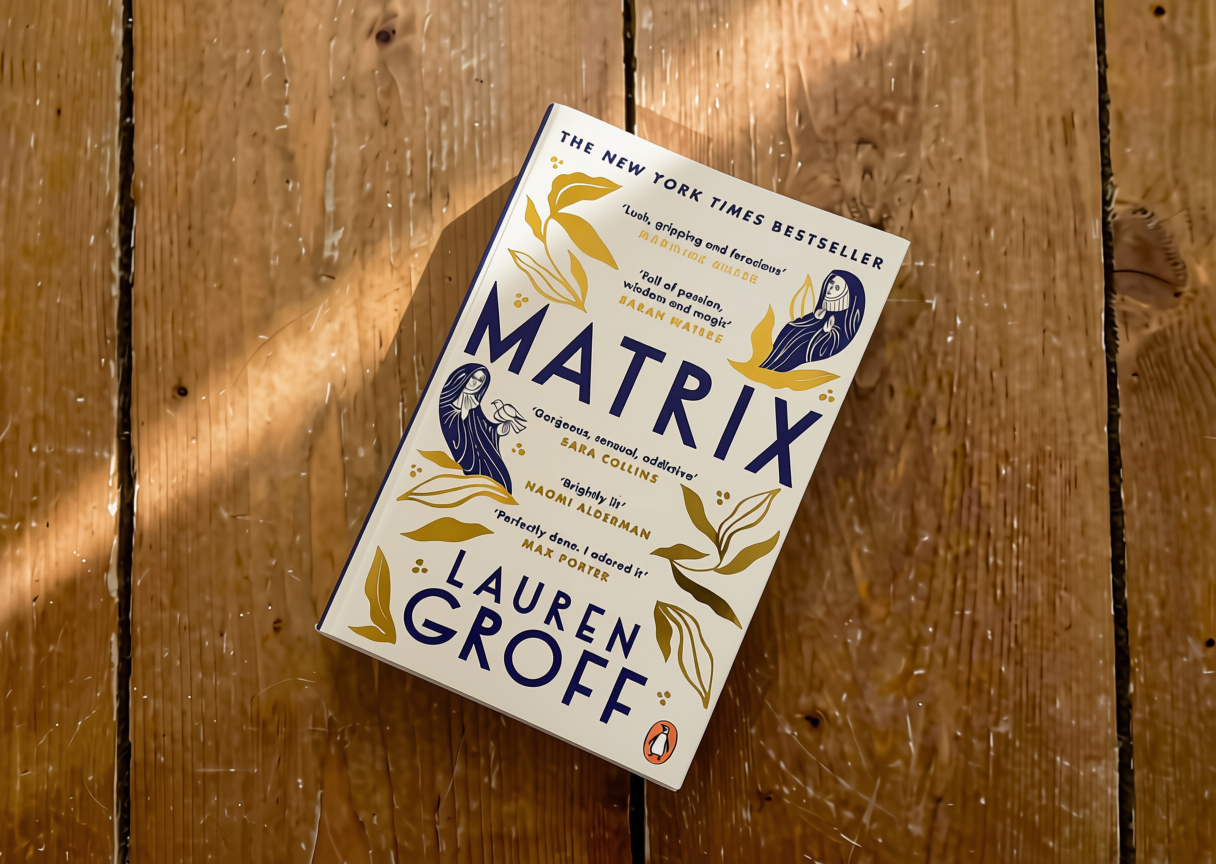
Enter Marie, based on Marie de France, who has been cast out by her queen from France, discarded from royal relations, and leaving behind her secret lover, Cecily, who chose to stay behind at the royal court of Eleanor of Aquitaine that Marie is exiled from. Marie, an illegitimate half-sibling of the King, Queen Eleanor’s husband, is described with heft, a “large” and deemed unattractive woman who is strong, determined and authoritative, born from a long line of female warriors and crusaders.
Once she comes to terms with her new circumstances (“She will do all that she can do to exalt herself on this worldly plane. She will make those who cast her out sorry for what they’ve done,”) she has visions of the abbey, perhaps imaginative or epiphanic, that inspire her and her nuns to transform it. Burdened by scarcity, Marie takes on a new vision for the impoverished abbey. But one thing is for sure, the nuns of the abbey love to gossip. Marie dons a thick skin of stoicism and sternness, but quietly burns inside for her secret lover, Cecily; the decadence she had known in France; and her complex, unrequited “terrible love” for Queen Eleanor and the French court that had cast her out. “One day they will see the majesty she holds within herself and feel awe. Her love for Eleanor she buries deep within her, even though it is still alive, and it will flare up in her life and have to be banked again.”
Over time, however, as we follow her from seventeen into midlife, she discovers her power from her day-to-day life of duty and devotion. Attempting to mirror Eleanor’s image of power, Marie’s deftness shapes her into a leader of sorts, and she inspires her new sisterhood of nuns to help transform the abbey into a place they can make their own in a world that is shaped by the men around them. Throughout the novel, Marie becomes our saintly, knightly figure, riding across rough terrain, a commanding presence in her own right. All the while, she writes devoted poetry for the Queen — her collection of Breton lais — of which Eleanor is the muse, in the hope that Marie will win back the affections her heart so desires.
What stands out about Matrix?
In Matrix, womanhood is brandished like a sword. Our protagonist, Marie, sets out to create a female utopia through her visions of strength and creativity. The complex, multilayered prose is rich with wit, subtle humour, vivid eroticism and religious ecstasy, culminating in an ethereal, transportive story of devotion, forbidden love, labour and lust.
Matrix immerses us in a past world, crafted through Groff’s phrases that turn over smoothly and sharply with vivid accuracy, observation and sensuality. The fragility and strength of mortality are brought to life through natural imagery personified through the abbey and its surrounding landscapes, creating a larger-than-life effect of mythology and storytelling that makes the moments of intimacy and tenderness feel electric and alive with intensity, shining bright in the darkness that shrouds the abbey around them. As seasons pass and nature flourishes and dwindles around it, the fleeting moments of tenderness between Marie and the other nuns, and her subsequent trysts as she yearns for Cecily and Queen Eleanor, feel intense and consequential. Still, she is a figure of strength, the mother, or matrix, of the abbey.
Article continues below.




The 12th-century abbey feels worlds away from the modern world we live in today, but Groff constructs an image of a feminist separatist utopia that shows women working together in typically male roles and responsibilities to eliminate starvation and to create a safe community of sorts, albeit without a definitive answer as to what the implications of authoritarian power might be.
The verdict?
Groff carefully crafts this brilliantly imaginative and transportive story about devotion, women, love, lust, power and religion, to toe the very thin line between freedom and authority. While some moments jump around a little bit, and crucial plot points or vast spaces of time feel slightly underdeveloped compared with other parts of the novel, the historical details feel well-researched even where poetic licence is clearly at play (anyone with better knowledge than me of this period from real life may spy faults I was ignorant of), and the prose is beautifully cinematic. For fans of Sarah Waters and Madeline Miller, or anyone who loves the world-building of romantasy and the rigour of literary and historical fiction, with escapism from the present day, this one’s for you.
An extract from Matrix:
“Perhaps the song of a bird in a chamber is more precious than the wild bird’s because the chapel itself makes it so. Perhaps the free air that gives the wild bird its better song in fact limits the reach of its prayer. So small, this understanding. So remarkably tiny. Still, it might be enough to live for. Fine then, she thinks with bitterness. She will stay in this wretched place and make the best of the life given her.”
Our star rating for Matrix:
Buy your copy of Matrix on Bookshop.org now. For more sapphic reading recs, check out our other book reviews here.
Nonchalant x
You may also like

Lauren is a writer and editor based in Lewisham, covering all things queer culture, books, travel, arts and lifestyle. She also writes about hospitality and foodservice, sustainability, business and tech, and was previously a features editor for New Statesman Media Group.

