
For any mother who has tried to hold a career and a family in the same two hands, Dagný Brynjarsdóttir’s story will feel familiar – even if hers played out on an elite football pitch, four months postpartum, on four hours’ sleep.
West Ham United have announced that the former captain is returning to the Club as an ambassador for the women’s team, a new chapter for a player who spent four years in east London before moving home to Iceland with her husband and children in 2025. We sat down with her for an exclusive interview while she was back in the UK this week – spending the evening with West Ham’s U21s at their Chadwell Heath training ground – to talk about the role, and about the thing that runs through so much of her story: being a mother and a professional footballer at once, and refusing to accept those two things can’t sit side by side.
A proud ally of the LGBTQ+ community, Dagný’s story speaks to something plenty of our readers know well – that building a family and chasing a career shouldn’t mean choosing one over the other.
Coming back to West Ham
Leaving West Ham wasn’t easy, and Dagný is honest that the decision to go home was a hard one. But staying connected to the Club matters to her.
“It means a lot to me. It was a hard decision when I left,” she says. “I always knew eventually we would move back home, but it’s nice for myself and my family to still stay connected to the Club. And I’m just excited about the role.”
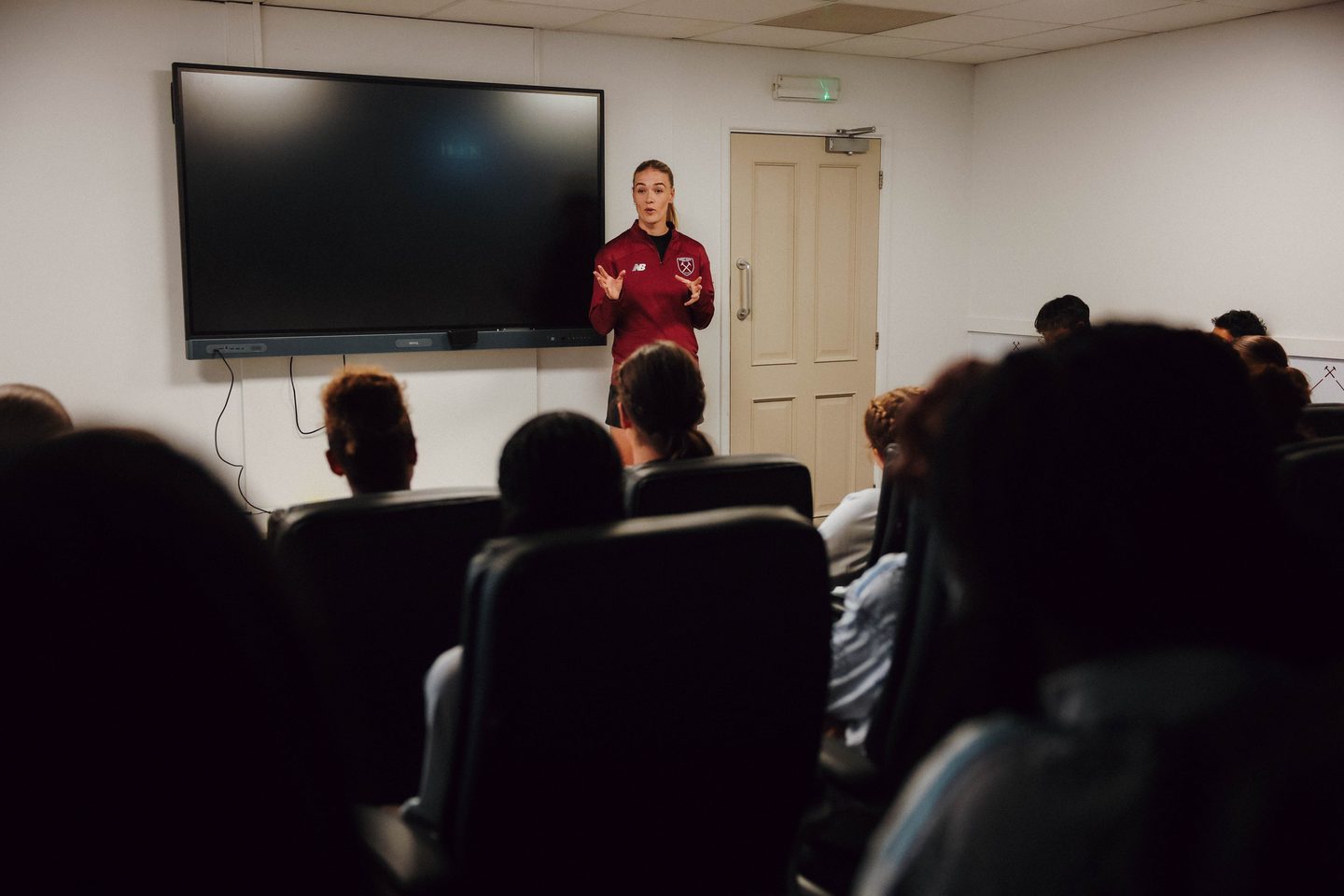
In March 2024, West Ham released Ómarsson, an original documentary following Dagný’s pregnancy as a professional footballer. When the Club approached her about telling the story of her second pregnancy, she saw a chance to show younger players and women something she’d needed herself.
“When I got pregnant with my first, there were not many mums playing football at the time,” she says. “I thought it was a great idea to tell my story – all the positivity, but the negativity as well. Because it is a hell of a ride, to be honest.”
She thought about what her younger self would have wanted to watch. “If I thought about my younger self, it’s something I would have liked to watch when I was going through the pregnancy for the first time. So I thought it would be good to be a role model for players going through it for the first time, but also girls and women thinking about whether they want to do the same. Not even just football – just play sport, but still have a family as well.”
Article continues below.


People assuming her career was over at 26
Dagný is candid that the pregnancies she talks about here weren’t planned. She found out she was expecting her first child at 26, around two weeks after what she calls the best game of her life.
“I played probably the best game of my life with the national team – away in Germany. I scored two goals and had an assist, and Germany hadn’t lost at home in 19 years,” she says. She doesn’t think she knew she was pregnant at the time. “It was a big shock to me. But I’d been with my husband for 10 years, so we knew that’s what we wanted at some point. I was like, this is meant to be.”
What followed was tough, both mentally and physically – and lonely. “I was trying to find so much online, researching, but there was nothing really that could help me. At the time, coaches, physical therapists – I felt like I just had to do it. And it was so hard.”
She’s frank that she made mistakes the first time, during pregnancy and in returning to play, which is exactly why the second time went more smoothly. And she pushes back hard on the assumption she met when she first fell pregnant: that her career was over.
“So many people were like, oh, you’re just finished playing. And I was like, I’m 26. Why should I be finished?”
It turned out to be, in her words, the best thing that happened to her. “It made me a better player and a person.”
Ask Dagný what would make the biggest difference for players coming up, and her answer is clear: support has to start on day one, not once a player is already back to full fitness.
“A lot of clubs have done well, but there’s still so many who have a long way to go – clubs and national teams,” she says. “It’s so important to be there for the player from day one, when they tell you they’re pregnant, and help them through it. Because it’s going to be hard physically, mentally, and probably even harder when they want to be back on the pitch.”
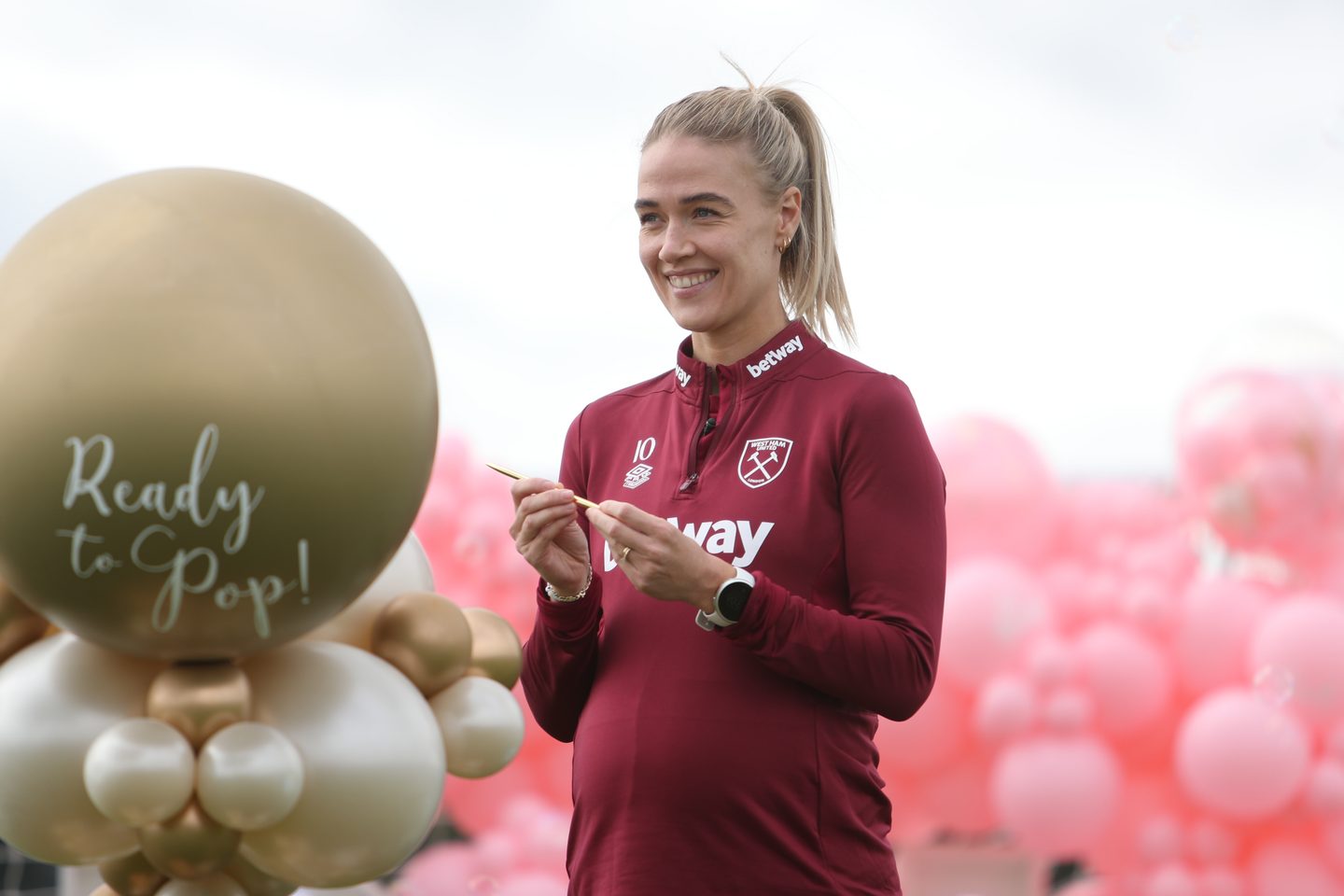
Her frustration is with support that arrives too late. “A lot of clubs and coaches want to be there for the player when the player is already back to themselves. But that’s not really when players need them. You need them through the journey, not when you’re back to yourself. Then you can do whatever – but you need the help mentally and physically to get there.”
What she pulled off is worth sitting with for a moment: returning to elite training four months postpartum, playing at the top of a physically brutal sport while raising a young child and running on next to no sleep. She is quick, though, to credit the support system around her rather than take it all herself.
“Having a great support system is the key,” she says. “Big credit to my husband – he has to do a lot. And when he wasn’t available, my mum did a great job coming over. Even my dad came for a few days, my older sister.” At West Ham, she says, the help came from all corners: injured players who would sometimes help out, or the wife of the strength coach when she had time off work. “If I didn’t have the support system, I couldn’t do it.”
The rest was organisation, discipline and mindset. She remembers turning up to train four months postpartum, before pre-season, having barely slept – her son was teething, she thinks, though she didn’t know it at the time.
“There were a few nights in a row where I barely got any sleep. I told the strength coach, I don’t know how much I can do, I think I slept four hours.” She admits she probably should have said something sooner. “That’s like me, when I feel like I have nothing left. But I still wanted to do the full session he had planned.”
The hardest part was mental, and it was the thing nobody warned her about: patience. “That’s probably what I was missing when I was pregnant. No one told me you had to be patient. I wanted to be back to myself right away. But that’s not how it is, and that’s what makes it hard mentally.”
Dagný captained West Ham, and she’s certain motherhood made her a better leader – and a better person.
“It was a lot easier for me to put myself in other people’s shoes, and I was more patient with people, helping people out,” she says. “The mother instinct is just there. You’re still the same leader, just in some way better.”
It also changed what she lets get to her. “Little things don’t annoy me as much – you just deal with it. You pick and choose what you’re going to let affect you.”
What she wants to pass on
The ambassador role is about giving back to the next generation, and Dagný’s message to young players is simple: dream big, and know that nothing is given.
“If they have a dream, they can go for it. Dream big and go for it,” she says.
“I’m from a town of 850 people, and I dreamed big. I ended up here – who would have thought, when I was 10 years old?”
For her, background is no barrier. “It doesn’t matter where they’re from or what their background looks like. If they’re ready to work hard and be a good person, they can go quite far.”
Everything is possible, she says. Nothing is given. It’s a clear-eyed kind of optimism you only earn the hard way – and if the next generation takes even half of it from her, West Ham have picked exactly the right woman for the job.
We wish you all the best in your next journey Dagný,
Nonchalant x
Your next read: More than a Lioness – Anita Asante on motherhood, the WSL, and raising Gigi
You may also like

Abi is the Founding Director of Nonchalant Magazine. She’s previously had a 7-year career in Digital Marketing within the eCommerce and Travel Sector. Aside from running Nonchalant, she’s a Lead Software Engineer and has worked on large scale projects for some of the biggest tech giants and was recently shortlisted on the Google Startups and Computer Weekly ‘Women in Software Powerlist 2020’.
Find me on: Instagram

