
Prairie Oyster, the debut queer novel by acclaimed poet Sophie Robinson, sheds light on addiction and obsession, as Pearl falls in love with cult queer indie filmmaker Mitch Meyer. Nonchalant Mag’s Lauren Hurrell spoke with the poet-turned-author about how the idea for a novel became a reality.
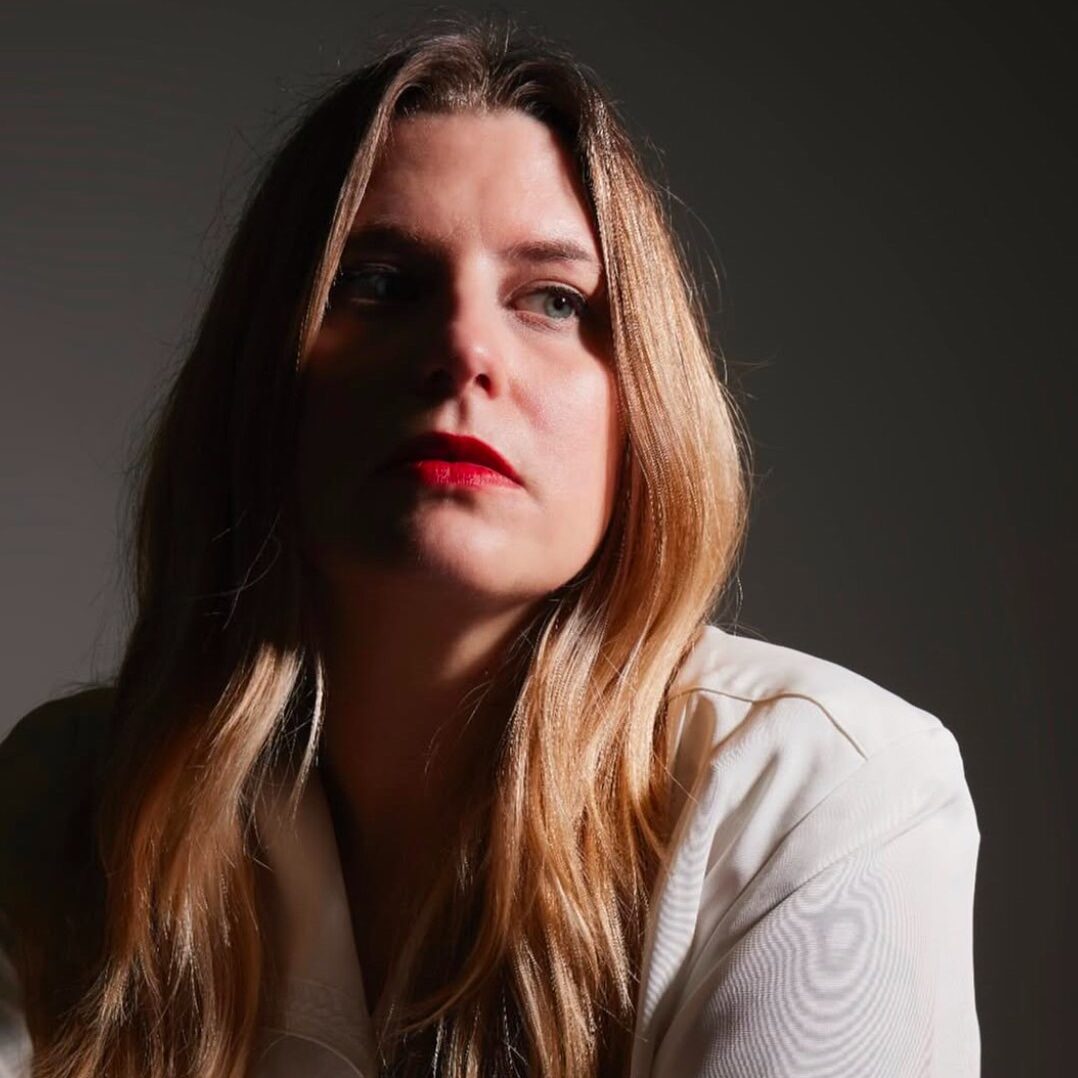
Lauren Hurrell: Could you tell us about yourself and your work?
Sophie Robinson: I’ve always loved writing, so the rest of my career has been dictated by that. I’m historically a poet. I became really interested in poetry through a love of experimental writing, the Beat poets, the New York School, new narrative work and autofiction. I got very excited by the idea that I could express myself in that way. I did a practice-based PhD and then went into teaching partly to grant me the time to write.
LH: Tell us about Prairie Oyster. What’s it about?
SR: We meet Pearl, an early-thirty-something wunderkind filmmaker whose opportunities are slipping away, mostly because of her drug and alcohol addiction. When she meets Mitch, a cult queer filmmaker twice her age, Pearl falls in love, swapping out one addiction for another. Meanwhile, she’s obsessed with 1940s silver screen actress Veronica Lake, who drank herself into oblivion and died of alcoholic hepatitis. Pearl’s attempts to make this impossible film about her life and Lake’s life are interspersed with scenes from a fictional last interview with Lake in the seventies.
LH: As a poet primarily, how did you find the experience of writing the novel?
SR: I’m not a fast writer at the best of times. The first scene I wrote was on my 33rd birthday, and I’ll be 41 this year, so it’s taken me such a long time, because lots of stuff happened, but also largely because of the difficulty I had writing narrative. Poets are very good at writing descriptive prose, we pay attention to unusual things. It originally was going to be a memoir or autofiction about my own experience of addiction and telling the story of Veronica Lake through my experience, but I realised that it would work much better as a novel.
You may also like: Book review: ‘Prairie Oyster’ by Sophie Robinson
LH: What queer writers inspired you to write Prairie Oyster?
SR: Afterglow by Eileen Myles is about their relationship with their dog, where this tapestry of their dog comes to life. It made me push the limits of what I thought I was capable of. The other was Paul Takes the Form of a Mortal Girl by Andrea Lawlor and Constance Debré. I returned to Kathy Acker over and over again for expanding what’s possible, and I was inspired by longer, book-length poems like Alice Notley.
LH: How did you write Prairie Oyster? What is your writing process?
SR: I learned early on that poetry slots into my daily life, I’m always writing in my phone notes. It just ebbs and flows like a way of seeing or filtering the world. With Prairie Oyster, I couldn’t do that. So I wrote the novel in stints, the first of which was in 2019 on a residency in Iceland in the middle of nowhere. One summer, my friend, the artist Sophie Jung, was away for a month so I lived in her house and looked after her cats. I also booked this cheap shepherd’s hut in the mountains in Perthshire. So that’s pretty much how I worked on it, clearing my calendar for a few weeks. Just me, a vape and some Diet Cokes.
LH: What made you decide to start the novel where you did?
SR: I realised it didn’t really matter where we started. I could have started Pearl’s story a year before and it would have looked the same. I wanted to throw people immediately into the action because it’s so chaotic, but I also wanted to give the impression that these scenes are on repeat in Pearl’s life. This sense that she’s in this very painful cycle that I think addicts recognise, doing the same thing over and over again and getting the same results.
Article continues below.



LH: Where did the inspiration of Veronica Lake come from, and what made that structure the best way to tell the story?
SR: I was very interested in women addicts and alcoholics. I was horrified by interviews with Marguerite Duras late in her life, how the interviewers made her this grotesque figure compared to how the media treats men who are addicts. Frank O’Hara is one of my favourite poets. He’s just the best, no one has ever done it better. But he was an alcoholic and he died at, like, forty, because he was hit by a beach buggy. Nobody dies from being hit by a beach buggy. He died as a result of being an alcoholic and we don’t talk about it very much. I became really stuck on Veronica Lake. I saw a lot of myself in her, and found her so magnetic and interesting, the way she lived so many years after her fame but just kind of disappeared. She died so alone that nobody picked up her ashes from the crematorium.
LH: Obviously, film is such a big part of Prairie Oyster. How else were you playing with that throughout?
SR: Mitch was inspired by a Kathy Acker-type, filmmaking equivalent, like Chantal Akerman, Barbara Hammer, Agnès Varda. Those are who I was basing Mitch on, whose films I was imagining Mitch making, inspired by interviews with those filmmakers. I think we all have a Mitch. In the film Tár, there’s a scene with Lydia. My friend and I have those ‘Lydia Tár innocent’ T-shirts. I saw the other day that St. Vincent has one, I thought, good taste. Lydia Tár is picking her kid up from school, and her kid’s being bullied. She goes up to the little boy and says, “I’m Petra’s father”. So we also call a Mitch character ‘Petra’s father’ in my friendship group. A successful, charming, emotionally unavailable, usually older ex. In some ways it’s a rite of passage, it’s character building, but it’s absolutely horrendous. I did it a second time, actually. Like, girl, like, there’s no need for the sequel.
I’m also very interested in queerness, not just who you have sex with or who you’re romantically involved with, but as a way of life. It was important to me that all of the relationships reflected my experience of what it is to be queer. Her relationship with Mitch is almost a father figure, non-binary lesbian parent figure but also a lover. It’s a consensual relationship and they both find the age gap sexy. I’m surprised people haven’t mentioned that more, so it was important to me that it was made clear Pearl was in her early thirties. If she was 19, it would be more of a problem.
LH: The novel shifts between New York, LA and Iceland. What did you want these places to do in the novel?
SR: I wanted to give a sense of mirroring how I saw Lake’s life. She spent a lot of time running away from things. She lived everywhere, like from Ipswich to Cuba and New York, and I still don’t completely understand how because she was also broke. I wanted to give this sense that Pearl is running away from herself. New York is important for where Mitch lives, for queer arts of the late twentieth century, that’s where everything was happening. It was important that Pearl went to Hollywood where Veronica was. Iceland, I just had to include it, because the residency I did was so life changing, and I needed Pearl to be removed from everything to recover and have this pause for being given a second chance.
LH: What do you hope people take away from this story?
SR: The book is really a love letter to cinema history and queer culture. I wanted to convey what it feels like to watch a film on the big screen. The least fictional thing about it is Pearl’s experience of alcoholism and addiction, it’s very much based on mine. I wanted to give people a sense of what it’s like to be an addict, to know you’re making choices that are bad for you, to be poisoning yourself. It’s something people don’t talk about enough, and how dangerous alcohol is too.
I got very attached to Veronica Lake. I wanted to represent these two alcoholic women in a way that was honest and invited a reader in, but also to restore humanity and dignity to the experience. A lot of the Veronica stuff is fictional, but I ended it with a real quote from Veronica, that was really what she said in her last interview. She was like, I don’t regret anything. I did exactly what I wanted to do. It was important for me to end with that sense of giving her back her own story, and I wanted to end it honestly and imperfectly.
LH: Is there anything else you’d like to share with the readers of Nonchalant?
SR: I’m doing an event on June 11 in London with the writer, Lauren McQuistin. We’ll be talking explicitly about women alcoholics. I also have a really exciting program of events coming up in Devotion, the online creative writing school I run, including a queer ancestry summer school, and weekend intensive workshops. Other than that, I’m working on a new poetry collection and the very beginning of the first draft of novel number two.
Sophie Robinson is a writer living in Norwich & London. Her debut novel Prairie Oyster was published by Fleet in February 2026. Her poetry collection Rabbit (Boiler House Press, 2018) was the Poetry Book Society Wild Card Choice. Her work has been published in Granta, The Guardian, Stylist, BOMB Magazine, The Believer, N+1, The Poetry Review and The White Review. She runs Devotion, a radical and inclusive online creative writing workshop series, and publishes regular essays on feeling at her Substack Feelings Almanack.
You can buy Prairie Oyster by Sophie Robinson, published February 2026 by Fleet, at Bookshop.org now. If you haven’t already, make sure you read our Prairie Oyster review.
Nonchalant x
You may also like

Lauren is a writer and editor based in Lewisham, covering all things queer culture, books, travel, arts and lifestyle. She also writes about hospitality and foodservice, sustainability, business and tech, and was previously a features editor for New Statesman Media Group.

