
This month, we explore a story inspired by the renowned Greek myth of Andromeda. For those unfamiliar with Greek myths, Andromeda is the beautiful princess of Aethiopia, who was chained to a cliff by the sea as a sacrifice to the sea monster Cetus. She was saved by the hero Perseus, who fell in love with her and defeated the beast. But that’s just one version of the tale.
The brilliant author E.S McLeod presents a new retelling of the story, one that reclaims Andromeda’s agency in a narrative that has often been whitewashed. Although Andromeda is explicitly depicted as the Princess of Aethiopia, historically recognised as modern-day Ethiopia and the broader region south of Egypt, she has frequently been portrayed as white in Western art and literature, especially since the Renaissance, as her image became co-opted by European beauty standards.
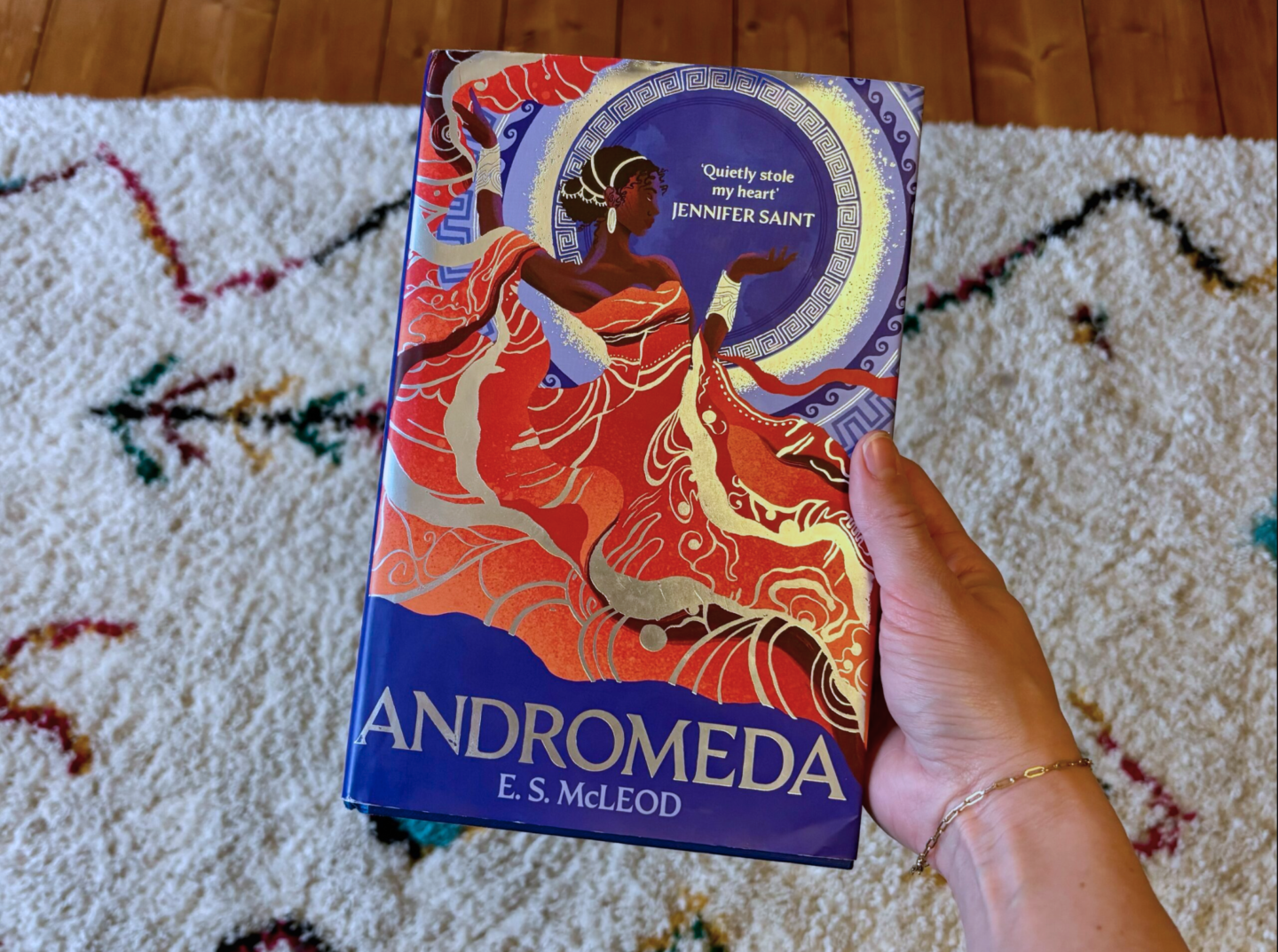
In this beautifully written (and seriously sexy) retelling, McLeod enriches Andromeda’s story by introducing a sapphic element to the canon of Greek mythology, creating a multifaceted tale that has historically been diluted by the practice of oral storytelling told through a white, male lens.
Warning, may contain spoilers *
What’s Andromeda about?
Blessed at birth by Athena and Aphrodite and renowned for her beauty, it is evident that Andromeda is destined for great things. However, when Andromeda’s mother, Queen Cassiopeia, claims that her daughter is more beautiful than the Nereids (the sea nymphs and daughters of Poseidon), her life is irrevocably changed. Until that point, Andromeda lived a sheltered life within the palace walls, with no concerns beyond her parents’ royal expectations.
Queen Cassiopeia’s blasphemous proclamation defies the gods, prompting Poseidon, the God of the Seas, to issue a fatal ultimatum, placing the queen’s life in Andromeda’s hands. He sends Ceto, a loyal servant and shape-shifting nereid, to guard Andromeda until judgment day, sealing the princess’s fate.
The intimacy between the two leads to unexpected tensions, beginning with mutual loathing and resentment. However, this resentment soon evolves into something passionate that neither of them could have anticipated, as they both realise that Andromeda’s beauty is not only a gift but also a weapon to wield.
What stands out in Andromeda?
McLeod’s lyrical prose transports readers out of their modern-day lives and immerses them in a beautifully crafted world. Her writing is romantic, elegant, and vast. The story of innocent beginnings transforms into a tale of self-discovery. McLeod reshapes this myth into one of love and survival within a world of brutal extremes and high stakes.
Article continues below.




This novel cleverly depicts the power of the gods while highlighting how the women in the story can improve their circumstances through intelligent subversion. The retelling honours the original myth without shying away from challenging it through a feminist lens.
At once heartbreaking and sad, and temptingly sexy and soaring for others, this novel bursts with powerful storytelling and beautiful imagery that bring a well-known story to life in a new, sapphic light, leaving us questioning why so few retellings like it exist.
The verdict?
For fans of Madeline Miller or any enthusiasts of Greek mythology, this is a beautifully written, original and refreshing take on the story of Andromeda; McLeod’s work is bold, intelligent, cinematic and otherworldly. While the highly lyrical and descriptive prose might be challenging for some, the payoff is a vivid, sensory experience you will feel long after reading, even if, like me, you know very little about the story of Andromeda before reading. Beyond its beautiful cover alone, this novel is just brilliantly impressive and deserves its flowers.
An extract from Andromeda
“She obeys. I pull her kalasiris over her head, then take off my own. I see her for the first time. I note where she becomes hard and soft, the bunch of her muscles melding with the steady slope of her breasts, their peaks high and dark. I ache to touch her, but we are both new at this, and I will not rush.”
Our star rating for Andromeda
You can buy Andromeda in hardback at bookshop.org now. For more book reviews, check out our book pages.
Nonchalant x
You may also like

Lauren is a writer and editor based in Lewisham, covering all things queer culture, books, travel, arts and lifestyle. She also writes about hospitality and foodservice, sustainability, business and tech, and was previously a features editor for New Statesman Media Group.

